By Matthew Holloway |
Arizona Public Service (APS) plans to keep the Four Corners Power Plant operating beyond its previously planned 2031 exit, citing reliability needs. Preliminary modeling estimates that extending operations through 2038 would reduce revenue requirements by approximately $1.02 billion from 2026 through 2041.
In a recent presentation to its Resource Planning Advisory Council, APS disclosed that it had signed an agreement with Navajo Transitional Energy Company (NTEC) allowing continued operation beyond 2031. The presentation compared a 2038 extension with a base case incorporating a 2031 exit and a new pipeline in 2030.
APS told KJZZ it signed the confidential agreement in September. The utility is preparing an updated resource plan amid growing electricity demand, including demand from data centers.
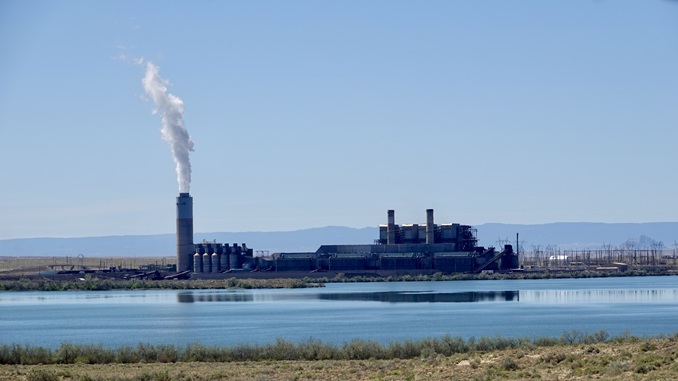
Located on the Navajo Nation in New Mexico, Four Corners is APS’s last remaining coal-fired power plant. Its two units provide approximately 1,540 megawatts of generating capacity. APS owns 63%, representing about 970 megawatts, and the facility employs approximately 250 APS employees.
The utility said its lease with the Navajo Nation permits operations through 2038 and that future decisions will continue through its integrated resource-planning process. APS cited the value of existing generation as it adds resources to meet Arizona’s growth.
The company said its analysis showed the potential for a “meaningful reduction in costs to customers” compared with retiring the plant in 2031. Its announcement did not specify an individual customer’s projected bill savings.
APS previously outlined a 2031 departure from Four Corners during an Arizona Corporation Commission resource planning workshop, where commissioners emphasized reliability and affordability as utilities prepared for growing electricity demand.
By September 2025, the utility’s planning documents contemplated a Four Corners exit between 2031 and 2038. The newly announced agreement advances APS’s plans to continue operating beyond the earlier date.
APS’s coal-generation decisions have also drawn attention from President Donald Trump. In April 2025, the President directed Energy Secretary Chris Wright to save APS’s Cholla Power Plant in northeastern Arizona, drawing support from Rep. Eli Crane (R-AZ-02). APS had stopped coal operations at Cholla the previous month.
In August 2026, APS began pursuing a natural gas conversion for that facility. The Four Corners agreement separately advances continued coal generation at APS’s remaining coal-fired plant.
In its September presentation, APS showed a $1,023.5 million reduction in net-present-value revenue requirements compared with its base case. The analysis covers 2026–2041 and is labeled as draft modeling.
APS’s planning scenarios also examine higher natural gas prices, construction costs, different levels of electricity demand, and pipeline delays. The utility’s proposed resource strategy includes continued Four Corners operations alongside additional natural gas, renewable generation, battery storage, and transmission development.
Navajo Transitional Energy Company, whose Navajo Mine supplies the plant’s coal, welcomed APS’s decision.
“It helps extend the FCPP, in turn bringing more reliability to the electric grid in our region,” NTEC Board Chairman Tim McLaughlin said. He also cited continued employment and revenue for the Navajo Nation.
NTEC reported that Navajo Mine employs more than 350 people, predominantly Navajo Nation members and members of other Native American tribes. The company said annual taxes and royalties from the mine and power plant account for approximately 35% of the Navajo Nation’s General Fund.
The company also reported more than $128 million in annual economic impact and more than $1.7 million in contributions to Navajo Nation communities during 2025. Those figures were reported by NTEC.
Environmental organizations opposed the extension. The Sierra Club argued that continued operations would prolong air pollution, water consumption, and climate impacts. It also disputed the economic case for keeping the plant operating.
Tó Nizhóní Ání Director Nicole Horseherder criticized the extension’s effects on Navajo communities, while Sierra Club Grand Canyon Chapter Director Sandy Bahr questioned whether APS’s coal and natural gas plans were consistent with its carbon neutrality goal.
APS previously announced plans for seasonal operations as part of its anticipated transition away from coal by 2031. That proposal called for one unit to operate June through October, with the other available year-round, subject to market conditions and maintenance. APS estimated that arrangement would reduce annual carbon emissions by 20% to 25%.
APS has scheduled a virtual public stakeholder meeting for Oct. 14, from 9 to 11 a.m., to discuss its 2026 Integrated Resource Plan.
APS develops that plan every three years to evaluate electricity needs and resources over a 15-year period, then files it with the Arizona Corporation Commission.
Matthew Holloway is a senior reporter for AZ Free News. Follow him on X for his latest stories, or email tips to Matthew@azfreenews.com.