By Ethan Faverino |
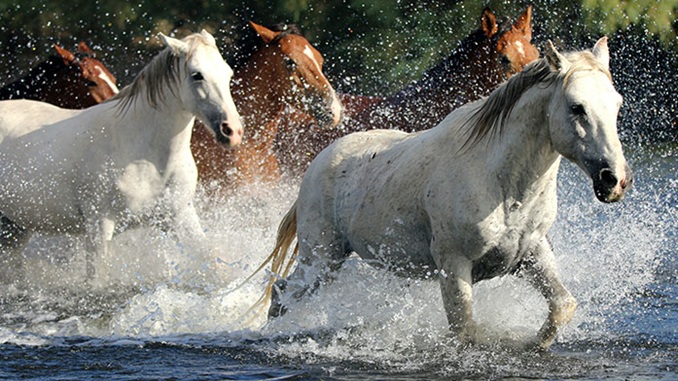
Congressman Juan Ciscomani (R-AZ-06) joined a bipartisan group of lawmakers calling for a federal investigation into the Bureau of Land Management’s (BLM) Wild Horse and Burro Sale Program. The lawmakers cited concerns that federally protected animals are entering the slaughter pipeline.
Ciscomani, co-chair of the Congressional Wild Horse Caucus, co-led 17 congressional colleagues in requesting that the Government Accountability Office (GAO) conduct an independent review of the program.
The lawmakers are asking the GAO to examine how the BLM uses its authority to sell wild horses and burros, including how prospective buyers are screened, what happens to animals after they are sold, and how the agency responds when animals appear at auctions or facilities associated with the slaughter industry.
“It’s long past time to fix the ongoing failures in how America’s wild horses are managed,” stated Ciscomani. “For years, across both Republican and Democrat administrations, we’ve seen alarming reports of hostility toward these animals and serious questions about how the Bureau of Land Management is carrying out its responsibilities. This cannot be a partisan issue. It’s a stewardship issue. I’m proud to join this bipartisan effort to demand accountability, protect our wild horses, and push for real solutions that address the problem head-on.”
The request follows recent reporting raising questions about whether existing BLM safeguards are sufficient to prevent federally protected horses and burros from eventually being transferred to slaughter.
In their letter to the GAO, lawmakers pointed to a sharp increase in the number of animals sold through the program. According to figures cited in the letter, the BLM sold 3,718 horses and burros in 2025, compared with 268 in 2015.
The lawmakers also highlighted the distinction between animals placed through adoption and those sold by the federal government.
Under the adoption process, animals remain under BLM jurisdiction for at least one year before title is transferred, during which the agency may conduct compliance checks. Animals purchased through the Sale Program become private property upon purchase and are no longer under BLM jurisdiction.
Rep. Dina Titus (D-NV), another co-chair of the Congressional Wild Horse Caucus, said the reports warrant further investigation.
“We now know what we have long suspected—that the BLM has been selling off wild horses that end up in slaughterhouses,” said Titus. “This practice must end now. I am leading my Congressional colleagues in demanding an investigation of the Wild Horse and Burro Sale Program to ensure wild horses and burros received the protections they are guaranteed by federal law.”
The congressional letter cited previous problems involving the program, including a 2012 case in which approximately 1,700 wild horses were sold to a single buyer despite warning signs that lawmakers say indicated many could be destined for slaughter.
The lawmakers are now asking the GAO to determine how effectively the BLM screens high-volume or repeat purchasers, whether it tracks buyers with connections to livestock auctions or slaughter-related businesses, and how often the agency has repossessed animals or restricted purchasers following sales.
Rep. Mark Pocan (D-WI) said congressional protections for the animals require greater oversight of the program.
“Our laws demand that we protect wild horses, not send them to slaughter,” said Pocan. “Congress has always worked in a bipartisan manner to protect these animals, and we need accountability and oversight at the Bureau of Land Management immediately. We hope this request will force the Administration to do the right thing.”
The lawmakers also want investigators to determine whether the BLM’s current practices comply with congressional restrictions intended to prevent healthy federally protected wild horses and burros from being destroyed or sold for processing into commercial products.
Patricia Miller, chair of the board of directors and executive director of American Wild Horse Conservation, called the requested investigation an opportunity to examine the program and its safeguards.
“The GAO investigation is a critical step toward uncovering and eliminating abuses within the Sale Authority Program, abuses documented through AWHC’s longstanding investigation and recently brought to national attention by The New York Times,” stated Miller. “No federal program should allow America’s treasured and legally protected wild horses and burros to be funneled into the slaughter pipeline.”
“We are deeply grateful to Representative Dina Titus and her fellow Congressional Wild Horse Caucus co-chairs, Representatives Ciscomani, Cohen, and Pocan, for leading this essential oversight effort and advancing the agency accountability and lasting reform necessary to ensure these animals receive the protections promised to them under federal law,” she added.
Manda Kalimian, founder and president of Rewilding America Now, also backed the requested review.
“America’s wild horses are an irreplaceable part of our nation’s heritage and belong to the American people. Slaughter is not a management tool, and Congress has made clear these iconic animals are to be protected, not destroyed with taxpayer dollars,” said Kalimian. “We are grateful to Congresswoman Dina Titus for her leadership, and to her colleagues for requesting a GAO audit of the BLM’s Wild Horse and Burro Program. This review will help bring greater transparency and accountability to the Sale Authority Program and move us toward humane, effective solutions. Slaughter is never the answer, and we must work together to find a better path forward.”
The oversight request is part of Ciscomani’s broader work on federal wild horse policy.
Ciscomani previously joined Titus and Rep. Steve Cohen (D-TN) in introducing the Wild Horse and Burro Protection Act of 2025.
The legislation would require the federal government to phase out the use of helicopters and fixed-wing aircraft for wild horse and burro roundups over two years.
The bill would also require cameras on aircraft used during the transition period and direct the GAO to report to Congress on humane alternatives to aircraft-based roundups, potential job opportunities associated with those alternatives, and the effects of aircraft on wild horse and burro populations.
The legislation was referred to the House Committee on Natural Resources.
Ethan Faverino is a reporter for AZ Free News. You can send him news tips using this link.