By Staff Reporter |
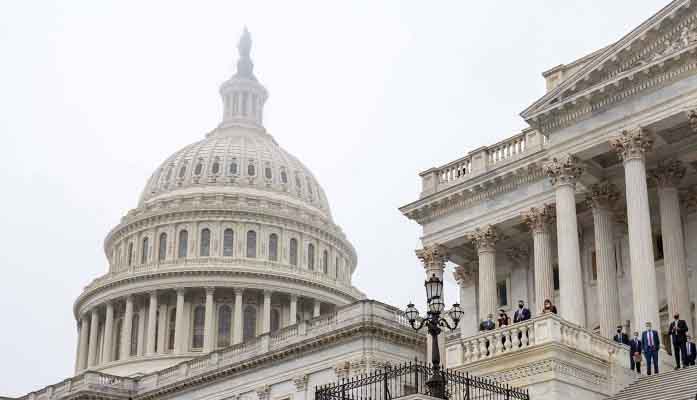
The U.S. House passed legislation mandating victims of certain sexual or violent crimes have lifetime protections against their abusers.
Rep. Abe Hamadeh (R-AZ-08) sponsored the Kayleigh’s Law Act of 2026, or Kayleigh’s Law, named after Arizona native and survivor advocate Kayleigh Kozak. Reps. Andy Biggs (R-AZ-05), Eli Crane (R-AZ-02), Paul Gosar (R-AZ-09), Juan Ciscomani (R-AZ-06), and David Schweikert (R-AZ-01) were among the bill’s original cosponsors.
The legislation passed via unanimous voice vote on Monday.
In an address on the House floor, Hamadeh said that the bill would ensure that the criminal justice system would no longer prioritize the desires of abusers over the safety of victims.
In a press release, Hamadeh stated that Kayleigh’s Law would “eliminate the ‘legal tug-of-war’” requiring survivors to face their abusers in court.
“This bill is simple. When a predator is convicted, federal courts must issue a lifelong no-contact injunction. Not until probation ends. Not until some judge decides the offender has ‘moved on.’ For life,” said Hamadeh. “Victims should never again have to fill out another form, sit across from their abuser, or look over their shoulder because the sentence ran out and the system shrugged.”
Kozak has attested in many interviews in recent years that she was victimized by her middle school P.E. teacher who was also her soccer coach. Her abuser requested an end to probation in 2020, 13 years after his conviction, and Kozak was given three weeks’ notice.
“Two times as an adult she was hauled back to look at the man who destroyed her childhood just to keep him away. No victim should ever have to do that,” said Hamadeh.
Arizona law already requires courts to issue a lifelong no-contact injunction for sex offenders. This federal version would expand that no-contact mandate to certain violent felons.
“Contact” was defined to mean all direct or indirect communication, transmission, or physical interaction, including written, oral, electronic, digital, or physical means and communications executed through an intermediary or technological systems.
The Arizona version of this legislation was enacted in 2022, and is also named Kayleigh’s Law.
Biggs’ running mate for Arizona Governor, Sine Kerr, was the sponsor that led passage of the Arizona version of Kayleigh’s Law.
According to Hamadeh’s office, more than 1,000 child sex abuse survivors in Arizona benefited from the state’s lifetime no-contact protections within the first year of the law’s enactment.
“Kayleigh’s Law would give every American victim of a federal sex crime or a violent felony that same shield,” said Hamadeh. “Healing cannot begin if the abuser can show up again the day after release. Justice is not complete if the victim still lives in fear. Arizona already closed that gap; it is time the federal government did the same, so no American, no matter which state they live in, is left unprotected after a federal conviction.”
Three of Kozak’s five children were present with her for the passage of the bill.
A related bill, also titled Kayleigh’s Law Act of 2026, is making its way through the Senate under sponsorship from Utah Sen. Mike Lee. It was read twice and referred to the Senate Judiciary Committee last month.
AZ Free News is your #1 source for Arizona news and politics. You can send us news tips using this link.