By Staff Reporter |
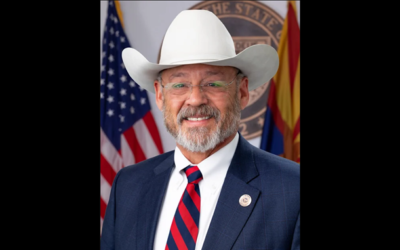
Navajo County will keep former lawmaker David Marshall as its recorder despite a legal challenge from Attorney General Kris Mayes.
On Monday, the Maricopa County Superior Court cleared the former state representative for the 7th Legislative District of any wrongdoing in connection to his assuming the Navajo County recorder position.
Marshall stepped down from the legislature in mid-April to fill the vacancy caused by the resignation of Navajo County’s former recorder, Timothy Jordan.
Attorney General Kris Mayes had promptly asked the courts to remove Marshall from the recorder’s office for accepting the appointment within the time period he would have continued to serve his term had he not resigned, citing as justification the Arizona Constitution’s provision barring members of the legislature from holding any other offices or taking employment with state or local governments.
From Article IV, part two, section five of the Arizona Constitution: “No member of the legislature, during the term for which he shall have been elected or appointed shall be eligible to hold any other office or be otherwise employed by the state of Arizona or, any county or incorporated city or town thereof.”
Marshall accepted the appointment several days prior to resigning from the legislature, and his legislative term was scheduled to end January 2027.
Mayes told Marshall in a demand letter that the Arizona Constitution required lawmakers to wait out their legislative terms prior to holding any other offices or accepting any state or local government employment, regardless of a resignation, citing the finding of an attorney general advisory opinion issued in 1977.
Mayes demanded Marshall resign on threat of legal action in the Arizona Supreme Court.
“Because your term as an elected representative will not conclude until January 2027, you are not currently eligible to hold another public office or be otherwise employed by the state or ‘any county … thereof,’” stated Mayes.
Maricopa County Superior Court Judge David McDowell disagreed with Mayes’ interpretation.
McDowell stated in a Monday ruling that only by taking the oath of office for county recorder as an active legislator would Marshall have run afoul of the Arizona Constitution. Marshall’s resignation from the legislature went into effect on April 17; Marshall didn’t take an oath of office to become county recorder until April 21.
Therefore, McDowell said Marshall was not a member of the legislature when he officially assumed the recordership.
McDowell’s finding was consistent with what Marshall’s private attorney, Linley Wilson, claimed in a response letter to Mayes, which cited Arizona Supreme Court precedent drawing a distinction between persons elected to the legislature and members of the legislature.
“The concern is straightforward: a sitting legislator should not be able to use his legislative power to create or enhance an office for his own benefit, trade votes for positions, or otherwise exploit his seat for personal gain,” stated Wilson. “It appears that no Arizona court has ever held that a legislator who resigned before assuming another appointed office was subject to ouster through a quo warranto action or any other legal proceeding. To our knowledge, every reported case in which ouster resulted involved a public officer who failed to resign or failed to cure a disqualification before assuming office.”
AZ Free News is your #1 source for Arizona news and politics. You can send us news tips using this link.