By Mike Bengert |
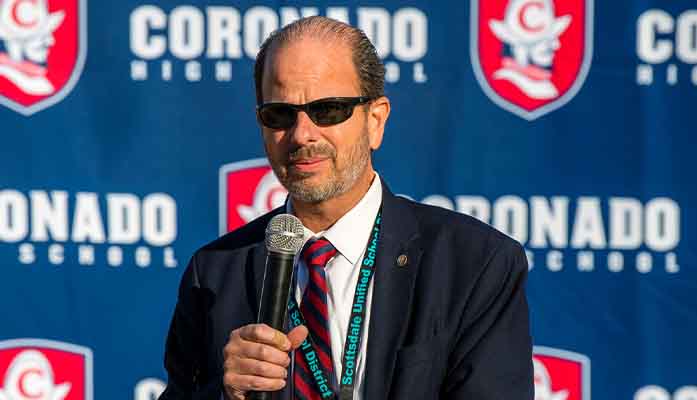
When Dr. Menzel was hired as Superintendent of Scottsdale Unified School District (SUSD), he arrived with a stated goal: to disrupt and dismantle what he believed were systems denying access and opportunity to students of color, students in poverty, and students with IEPs.
But was that truly the reality in SUSD before his arrival?
Regardless, Menzel has moved forward with exactly that approach, disrupting and dismantling the district. His emphasis on initiatives like gender identity and social-emotional learning, often at the expense of academic performance, has produced troubling results: school closures, declining academic outcomes, falling enrollment, record levels of non-classroom spending, teacher layoffs, and increasing staff turnover.
Disrupt and dismantle.
At the November 18, 2025, board meeting, Menzel outlined reductions in FTE staff at the district office over the past three years, arguing that all reasonable cost-cutting measures have been exhausted, leaving school closures as the only remaining option.
But is that really true?
When board members Amy Carney and Carine Werner raise concerns about wasteful spending or request detailed financial information, they are often ignored or told that staff are too busy to provide answers. Meanwhile, the expenditures they question are dismissed as not necessarily wasteful just because they disagree with them.
Not only has Menzel shown little interest in cutting favored programs or non-essential spending unrelated to improving academic performance, but he has also failed to address concerns raised in exit interviews, concerns that could help slow declining enrollment.
Disrupt and dismantle.
At a recent board meeting, it was announced that more than 130 applications had been submitted for the Phase II Design Team. Selections are underway, with the first meeting scheduled for March 26.
Menzel noted that Matt Pittinsky was the only board member to suggest closing more than two schools in Phase II. When asked by Menzel for input from the board about additional closures, Mike Sharkey responded that if the committee recommends closing three schools instead of two, “that’s great”—despite having campaigned on not closing schools. He added that committee members can “feel it out as it goes along” and gauge community reaction afterward.
Carney argued that school closures should be a last resort; Pittinsky disagreed, despite also campaigning against closures. He now claims more schools must be closed to maintain a “quality student experience.” But is this the same “quality” that has coincided with declining enrollment and revenue losses?
Carney pressed for early parent input through surveys, with Werner agreeing that community feedback should come at the beginning, not the end, of the process. Menzel, however, stated surveys would occur only after the committee completes its work, likely in late May or early June. Pittinsky, Sharkey, and Lewis supported that timeline.
While district leadership claims to value community input, their actions suggest otherwise. The committee is not being asked to explore solutions to the budget shortfall; they are being steered toward a predetermined outcome: closing schools.
For those who haven’t followed closely, the public comments from last fall’s board meetings tell the story. Parents from schools like Pima and Echo Canyon described being blindsided by closures, with little to no input. Even some board members indicated they were excluded from meaningful involvement.
According to the district, the Phase II Design Team members will “help inform discussions about enrollment trends, school facilities, and long-term sustainability through respectful, student-centered collaboration.”
But what does that actually mean?
A small group, selected by Menzel and guided by a district-paid consultant, is expected, over just a few weeks, to analyze years of enrollment data, financial trends, and demographic projections, and then “inform” district decisions.
Is that realistic?
So, what will this design team actually do?
In all likelihood, it will just validate decisions that have already been made by Menzel.
Over recent meetings, Menzel has presented Phase II “repurposing solutions.” One proposal involves relocating Cheyenne Traditional School (CTS) to Copper Ridge. He describes this as an opportunity to place a high-demand program in an underutilized facility with room for growth.
However, what goes unaddressed is the likely impact on enrollment. Moving CTS to the northernmost part of the district could drive families away, not attract them. CTS draws students from across the district, many within walking or biking distance of its current location. Relocating it would add significant travel time, potentially up to 20 extra miles per day for some families.
How many parents would make that commute? How many would instead leave CTS or SUSD altogether?
Similarly, how many Copper Ridge families would choose CTS or be willing to move to the Desert Canyon schools, or simply leave SUSD? These are critical questions, but they remain unanswered.
They could be answered now through parent surveys. Instead, feedback is being delayed until after decisions are effectively finalized.
If enrollment drops following a relocation, as seems likely, the result could be the eventual closure of CTS, the district’s last remaining traditional school, which could lead to even further declining enrollment and financial shortfalls for SUSD.
And that would align with Menzel’s stated goal: disrupt and dismantle.
Parents at Phase II schools should make their views known by contacting the Board and Menzel, using Let’s Talk, writing opinion pieces, participating in PTO meetings, and sharing information with parents through newsletters and social media. Don’t wait until decisions are final; speak up now. Community input is important.
Don’t let Menzel continue to disrupt and dismantle SUSD.
Mike Bengert is a husband, father, grandfather, and Scottsdale resident advocating for quality education in SUSD for over 30 years.