By Mike Bengert |
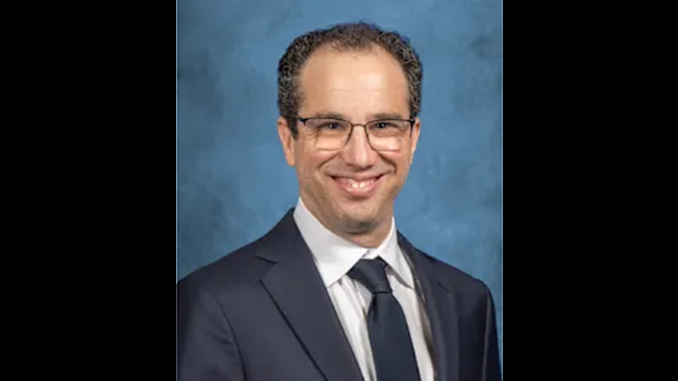
Anyone who has watched Scottsdale Unified School District (SUSD) Governing Board meetings over the past two years has likely noticed how often Member Pittinsky cites his business experience and expertise. He presents himself as a thoughtful decision-maker, especially when the board considers difficult choices such as closing schools.
Yet when the facts conflict or information is lacking to support what Menzel wants—or with what is right for SUSD students and parents—Pittinsky consistently abandons those concerns and votes in support of Menzel.
That is the pattern followed by the union-backed majority of education professionals on the Governing Board.
At the September 8th board meeting, Pittinsky asked how many students might leave SUSD if additional schools closed. Emphasizing his business background, he explained that businesses call this “churn.” Menzel and his staff agreed to provide the information.
At the October 6th meeting, when the board discussed and voted on the Phase II committee’s school closure recommendations, staff presented its “churn” analysis.
Notice that staff acknowledged receiving parental input, likely referring to surveys in which more than 160 families reportedly said they would leave the district if Laguna closed, but did not treat it as a “driving factor” in calculating churn. Instead, staff gave more weight to travel time, competition, and historical attrition.
Consider the contradiction: a district that says it values parents’ input discounted families who said they would leave and relied more heavily on other factors.
Menzel and his staff presented this as meaningful analysis for a critical decision about closing schools. That is difficult to accept.
The central problem is that closing four schools in two years, with more closures possible, is unprecedented in SUSD. Historical attrition is therefore an unreliable basis for estimating the effects.
Pittinsky’s response makes clear that he was dissatisfied with the analysis.
Pittinsky said:
“As I think it was noted, I’ve asked for this for a long time. I do need to say I am disappointed and frustrated that it came so late in the process. Not to be clear because I view it as like this point estimate. You know you could say 65,64,63. It’s all a function of the assumptions. But so, I think anyone who looks at these, my judgment at least, anyone who looks at this as a point estimate, I think that’s false precision.”
He continued:
“I think we can and need to do better in developing a much more multi-dimensional model for thinking about these kinds of enrollment dynamics.”
Although Pittinsky criticized the analysis and said the board needed a more sophisticated understanding of why families choose SUSD or a competitor, he nevertheless concluded that “it doesn’t block me from feeling like I can make a judgment tonight.”
In other words, Pittinsky acknowledged that the analysis was late, imprecise, and based on an incomplete understanding of declining enrollment, concerns many community members have raised for years, yet still felt prepared to vote on closing more schools.
Is that the way Pittinsky makes decisions in his business? Asking for data, not getting it, but proceeding anyway. The next time he says he needs data before making a decision, can we believe him?
The board and staff not only lack a clear understanding of declining enrollment, they have also declined to seriously examine alternatives to school closures, despite Member Carney’s repeated requests over the past two years.
Is the SUSD community comfortable with major decisions being made without adequate data and without considering all available alternatives?
As the October 6thmeeting moved to the proposed alternatives and the vote, the board discussed how Mesa Public Schools was addressing declining enrollment. The exchange between Members Pittinsky and Carney became heated.
Carney noted that, a year earlier, she had asked the board to create a long-range planning committee modeled on Mesa’s. She questioned why SUSD was not considering Mesa’s other strategies instead of focusing solely on school closures.
Although alternatives like Mesa’s were not on the agenda, and district counsel repeatedly warned Pittinsky to stop so as to avoid another open meeting law violation, he continued the discussion and more than likely committed another violation. SUSD had been cited in the past for a violation by the Arizona Attorney General for discussing non-agendized topics.
Pittinsky insisted that he had researched the issue and argued that Mesa was starting from a very different position than SUSD. The issue is not whether districts statewide are losing enrollment, that is well documented, or what is the root cause of the decline, which SUSD has yet to determine. The key question is how each district responds.
Pittinsky then said, “Mesa actually did close schools. They closed or repurposed three junior high schools and they did it very early in a way that our board has been less willing to do.”
Notice how Pittinsky shifted from the definitive claim that Mesa “did close schools” to saying it “closed or repurposed” them. He also distanced himself from prior decisions by referring to “our board,” even though he has served on it for the past two years.
The point Pittinsky, Sharkey, Lewis, and Menzel appear to miss, perhaps deliberately, is that Mesa developed a plan for declining enrollment rather than closing schools first and asking what to do afterward.
Pittinsky’s research also appears to have overlooked publicly available information showing that Mesa’s schools and governing board are pursuing strategic ways to create “vibrant and thriving” schools rather than “disrupting and dismantling” the district, the way SUSD is doing.
Here are some excerpts:
“Mesa Public Schools will offer more educational choices to families by transitioning an elementary school into an accelerated learning campus and launching two new high schools for the 2026-27 academic year.”
“Because of dropping enrollment, the district has to think strategically and creatively, Superintendent Dr. Matt Strom said, “Or we’re probably going to be moving to school closure within the next three to five years.”
“We were fortunate to receive a lot of feedback from parents and community members that were excited and eager for this change to happen,” said Jacob Martinez, vice chairman of the district’s Planning and Boundary Design Advisory Committee.”
I believe that last year Member Carney asked for this same committee to be formed in SUSD. But “our board” rejected the idea.
Here are some excerpts from an article by Rachel Walden, Mesa Public Schools Governing Board Member, on how their board has been addressing the issue of declining enrollment.
“We adopted a small school model that allows a school to stay financially viable and continue to operate. These schools have shared resources, shared staff, focused specials, and aides may be leveraged differently than at a comprehensive campus. The model provides the opportunity to specialize and meet student interests.”
“Financial uncertainty also means we must explore ways to bring in revenue, which is underway at MPS. Mesa fully welcomes ESA families. The Eagleridge campus offers three full days of educational programming for K-12 students from across the Valley. Ninety-five percent of Eagleridge is funded through ESA dollars. The MPS board approved a fee schedule allowing families to use ESA dollars to participate in classes at other campuses, which increases revenue to the district.”
“Responsible budgeting requires continual evaluation. Positions not related to the classroom and not required by regulation or law can be eliminated in many cases. Courses with low student interest should be removed, which will change staffing needs.”
“If enrollment continues to decline, the Board may eventually have to consider school consolidation or closure. Those decisions should come only after other strategies have been exhausted and after careful consideration of student outcomes, finances, facilities, transportation and community impact.”
Notice how rather than just blaming ESA for declining enrollment, like Menzel does, Mesa schools turns it into a revenue stream for the district.
Although there are several more stories like these, here is just one more.
“Faced with ongoing student loss, Mesa Public Schools is looking to reconfigure six of its campuses for the 2026-27 year instead of closing sites.”
The bottom line is that SUSD’s Governing Board, dominated by Menzel’s supporters, has failed its students, parents, and broader community. SUSD cannot continue electing board members who place Menzel’s agenda above students’ interests.
It is time for a change.
Mike Bengert is a husband, father, grandfather, and Scottsdale resident advocating for quality education in SUSD for over 30 years.