By Staff Reporter |
The Citizens Clean Elections Commission (CCEC) lacks the authority to revoke a candidate’s eligibility for public campaign funding once the candidate has been certified.
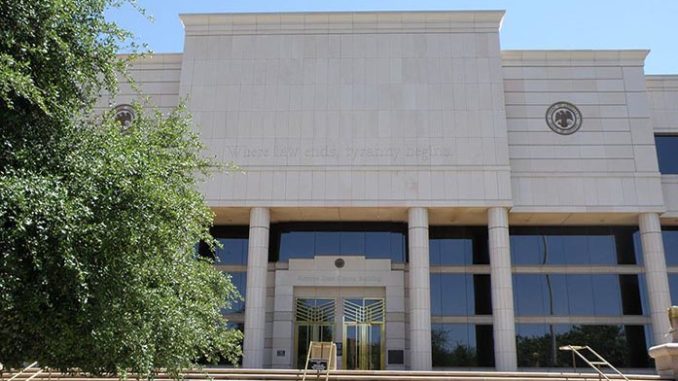
The Arizona Supreme Court clarified in a ruling last Friday that the CCEC does not possess greater authority than the secretary of state to determine which candidates qualify for Clean Elections funding.
The court ruled that the CCEC cannot overturn the secretary of state’s certification of qualifying contributions, which are $5 donations from individual donors that candidates must collect to qualify for public funding.
The case began after two Green Party candidates sued the CCEC in September: Risa Lombardo, who is running for governor, and DuWayne Collier, who is running for secretary of state. This latest ruling sides with the argument Lombardo and Collier made: that the CCEC was acting beyond its statutory authority by attempting to claim the power to override the secretary of state’s certification authority.
Tom Collins, CCEC executive director, sent letters to Lombardo and Collier in August accusing them of falsifying their qualifying contributions and warning them against further spending of their campaign funds. Collins advised Lombardo and Collier that they would be ordered to repay the millions in funds the pair received collectively.
Lombardo received about $2.8 million and Collier received about $739,000 from the CCEC.
In response, Lombardo and Collier accused the CCEC of threatening them with punishment prior to a formal investigation. The pair claimed the letters from Collins caused them to effectively suspend their campaigns. Both candidates say they felt too threatened to spend the Clean Elections funding the secretary of state certified them as eligible to receive.
The CCEC advised both Lombardo and Collier that they would have to repay the funds they received pending the outcome of the investigations. The CCEC gave Collins until later this week to submit the results of his investigation into Lombardo and Collier — Thursday, October 29, or five days before the general election.
The Arizona Supreme Court took on the case about a week before it issued this latest ruling.
In the ruling against the CCEC, Chief Justice Ann Scott Timmer cited A.R.S. §§ 16-950(B) and (C), state law that assigns the secretary of state and county recorders the role of certifying candidates that receive adequate qualifying contributions. Timmer also noted that the CCEC’s own rules also define those roles set forth by state law.
“The statute does not confer authority upon [the CCEC] over that process, nor do the rules contemplate it,” stated Timmer in her court ruling.
However, the CCEC will be permitted to continue its investigations into Lombardo and Collier.
Timmer said that the court would address the CCEC’s authority to investigate and power to punish candidates after the commission undertakes its investigation and in the event that it imposes a punishment. Timmer noted that the CCEC is no longer including the secretary of state’s certification of the candidates as part of its investigation; therefore, the court didn’t rule on whether the CCEC has the authority to order the candidates to return the public funds.
“Those issues are best addressed after [the CCEC] investigates any alleged malfeasance and imposes a remedy if malfeasance is found,” stated Timmer.
AZ Free News is your #1 source for Arizona news and politics. You can send us news tips using this link.