By Matthew Holloway |
The Arizona Auditor General found that Apache Elementary School District (AESD) improperly received state funding for out-of-state students and more than $27,500 in excess transportation funding, while raising concerns about employee benefits, technology controls, and the future viability of the eight-student district.
The Auditor General’s Office also reported that one audit finding was omitted from the public report because of its “sensitive nature” and was communicated directly to the district’s governing board and management.
According to the audit highlights, AESD, located on the Arizona-New Mexico state border, served just eight students during fiscal year 2024, with four of those students residing in neighboring New Mexico. Auditors found the district failed to comply with state requirements governing the admission and reporting of out-of-state students and improperly received state funding for those students. The report recommended that the district evaluate operational alternatives given the small number of Arizona students it serves.
The audit found that the district improperly claimed funding for out-of-state students and failed to charge tuition as required by state law. Auditors also concluded that the district improperly reported transportation miles associated with transporting out-of-state students to and from their homes in New Mexico, along with other reporting errors.
The report stated that the district “paid parents to transport students but did not ensure that all reported mileage and transported students were eligible for State funding and reported data was accurate.”
According to the report, those errors resulted in the district receiving more than $27,500 in excess transportation funding during fiscal year 2025 that it will likely be required to repay to the state.
The Auditor General recommended that the district work with the Arizona Department of Education to correct its student enrollment and transportation reporting errors and ensure future compliance with state requirements. Auditors also recommended that if the district continues admitting out-of-state students, it should charge tuition in accordance with state law.
In addition to the funding issues, auditors found that the district may have violated the Arizona Constitution’s Gift Clause by providing unauthorized fringe benefits to two employees. According to the report, the benefits were not included in employee contracts and were not approved by the district’s governing board prior to being provided. Auditors recommended that the district consult legal counsel to determine whether a Gift Clause violation occurred and, if so, report its determination to the Arizona Attorney General’s Office.
The audit also identified deficiencies in the district’s cash-handling procedures. Auditors reported that the district did not consistently prepare receipts when cash was collected and did not always make deposits in accordance with required timelines, increasing the risk of loss or theft.
The report further found weaknesses in the district’s information technology controls. According to auditors, employees and external users had excessive access to sensitive computerized data, while the district lacked comprehensive system monitoring, security awareness training, and an IT contingency plan. The Auditor General concluded that these deficiencies increased the risk of unauthorized access to sensitive information, data loss, errors, and fraud.
Auditors also recommended that the district work with the Cochise County School Superintendent’s Office to evaluate alternative operational structures. Potential options identified in the report include consolidating with another school district, operating as a transportation school district, or dissolving the district and requiring students to attend a nearby district.
The report noted that the majority of the district’s administrative spending was “for superintendent and business manager salaries and benefits.”
According to the Auditor General, the district’s governing board had three filled positions during fiscal year 2024, though one board member later resigned and only two of the three positions were filled when the report was issued in May 2026. The district’s small enrollment prevented the Arizona Department of Education from assigning a school letter grade or publicly reporting student achievement data in order to protect student privacy.
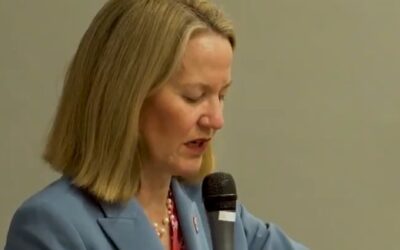
In its formal response to Arizona Auditor General Lindsey Perry, AESD agreed with the audit findings and stated it has already begun implementing corrective actions. Superintendent Loy Ann Guzman wrote, “While some recommendations already have been implemented, the district will continue to work diligently to complete administration of the remaining items and will work to improve the processes and procedures moving forward.”
The district reported that it has instituted procedures requiring proof of residency for enrolled students, worked with the Arizona Department of Education to correct enrollment reporting errors, and does not currently plan to admit out-of-state students. The district also agreed to evaluate operational alternatives with the Cochise County School Superintendent’s Office, review potential Gift Clause issues with legal counsel, improve cash-handling procedures, and implement additional information technology safeguards.
Matthew Holloway is a senior reporter for AZ Free News. Follow him on X for his latest stories, or email tips to Matthew@azfreenews.com.