By Ethan Faverino |
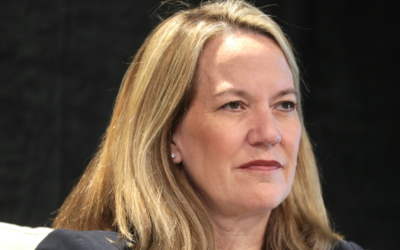
Arizona House Majority Whip Julie Wiloughby (R-LD13) praised a recent Trump administration decision recognizing the significant impact of internal emissions on Arizona’s ability to meet federal air quality standards.
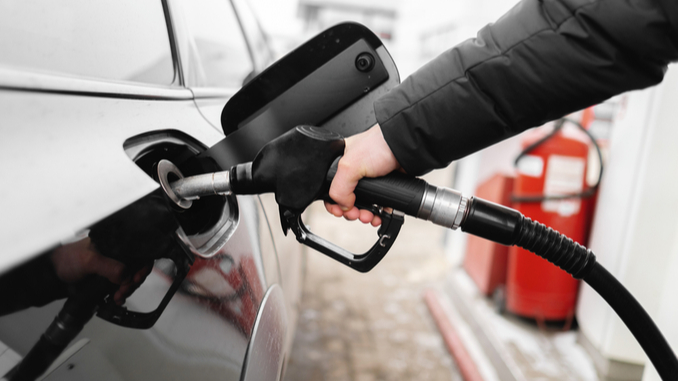
The ruling grants the Phoenix metropolitan area relief from stricter federal requirements, opening the door for potential long-term reforms to the state’s expensive summer gasoline blend mandated in Maricopa and Pinal Counties.
The decision, issued last week by the U.S. Environmental Protection Agency (EPA), found that the Phoenix-Mesa nonattainment area would have met the 2015 ozone National Ambient Air Quality Standards (NAAQS) if not for emissions originating outside the United States. This finding, under Section 179B of the Clean Air Act, prevents reclassification to a more severe status. It acknowledges that a major share of emissions affecting Arizona is beyond the state’s control.
For months, Willoughby has collaborated with local and federal officials to pursue reforms addressing Arizona’s higher summer fuel costs. In January, she sent a letter to the EPA initiating discussions on permanent changes to lower costs for families while maintaining compliance with air quality standards.
“The main reason drivers in Maricopa and Pinal counties pay more for gas in the summer is that these areas are forced to use a special boutique blend made only for Arizona,” explained Willoughby. “It costs more to produce, limits supply, and leaves our state more vulnerable to price spikes. The question is whether this requirement is still doing anything meaningful to improve air quality. If it is not, then Arizona families are being forced to pay more for little to no benefit.”
Willoughby noted that industry operations are cleaner and national fuel standards have evolved since Arizona’s blend was last updated. “Industry is cleaner today than it was when Arizona’s blend was last updated, and fuel standards nationwide have changed significantly since then. There is a strong possibility that Arizona can move to a lower-cost fuel option without sacrificing air quality. If the evidence supports that conclusion, we should act immediately.”
To advance the issue, Willoughby introduced a package of five measures aimed at lowering fuel costs, evaluating compliant fuel options, and requiring the state to adopt a lower-cost fuel once federally approved.
“In order to change the blend, Arizona must submit a request to the EPA to revise our State Implementation Plan and show that we can still meet federal air quality standards with the new blend,” added Willoughby. “The modeling used to make that demonstration must take into account the fact that a major share of the emissions affecting our state comes from outside our borders and is beyond Arizona’s control. The Trump Administration’s recent decision recognizing international transport acknowledges this impact and gives Arizona more room to reevaluate whether our current fuel requirements are still justified. With the federal government signaling openness, this may be our best and only opportunity to get this done.”
In February, Willoughby requested that the Maricopa Association of Governments (MAG) model the impacts of switching from Arizona’s current boutique gasoline blend (Reid Vapor Pressure of 7.0 psi) to a more widely available, lower-cost blend with an RVP of 7.4 psi.
Preliminary modeling completed in March showed that the switch would increase the maximum ozone concentration in the Phoenix metropolitan area by between zero and 0.01 parts per billion.
“That is a negligible impact and more than enough reason to move this conversation forward,” continued Willoughby. “Just as important, Governor Hobbs’ administration already has these results. MAG provided the modeling to her Department of Environmental Quality, which means the Governor could begin acting on this now if she wanted to. She does not need to wait. She does not need more excuses. If Governor Hobbs is serious about lowering fuel costs, she should direct her agency to act immediately.”
In a follow-up letter to MAG Director of Environmental Planning, Matt Poppen, Willoughby highlighted the positive results from the Comprehensive Air Quality Model with Extensions (CAMx v7.32) and Community Multiscale Air Quality (CMAQ v5.5) analyses. The CAMx results showed no changes in the 2023 design value attainment at any monitoring site, while CMAQ predicted a maximum impact of just 0.01 ppb at three sites.
Willoughby also requested additional modeling for a Federal Reformed Gasoline blend with an RVP of 7.8 psi, used in some other western states, and discussions on next steps for a State Implementation Plan revision.
“The modeling is favorable. The facts are lining up in Arizona’s favor. We should seize this opportunity and make the case for lasting gas affordability now,” concluded Willoughby.
Ethan Faverino is a reporter for AZ Free News. You can send him news tips using this link.