Ethan Faverino |
Congressman Andy Biggs (R-AZ-05) introduced legislation this week aimed at increasing water supplies and accelerating infrastructure projects across the Colorado River Basin. The legislation comes as the region faces historically low reservoir levels and new reductions in Lower Basin water deliveries.
The Colorado River Basin Water Security and Infrastructure Act would direct federal resources toward water augmentation, storage, desalination, recycling, treatment, and conveyance projects while changing federal permitting requirements for certain water infrastructure.
The legislation comes amid continued uncertainty over the Colorado River’s long-term management.
The seven Basin states did not reach consensus on a long-term post-2026 operating framework earlier this year. The Department of Interior subsequently finalized operating guidelines for 2027 and 2028 in August.
Those guidelines call for 1.25 million acre-feet in annual reductions to Lower Basin deliveries during each of the next two years.
“The goal of this legislation is simple: add new water, strengthen the Basin, and protect the farms, communities, and military installations that depend on the Colorado River,” stated Congressman Biggs.
Under the bill, certain water-supply projects would be exempted from requirements under the National Environmental Policy Act (NEPA).
Federal agencies would also face deadlines for reviewing project applications, including 30 days to determine whether an application is complete and 180 days to issue a final decision.
The legislation would also allow project sponsors to rely on a broader range of existing feasibility and impact studies rather than repeating previous engineering work. Major federal projects included in the legislation would receive congressional pre-authorization in an effort to shorten the time between planning and construction.
Another major component of the proposal is the creation of a Basin-wide Water Augmentation Fund. The program would provide a 2-to-1 federal cost share for eligible projects pursued by states, tribes, municipalities, utilities, and private partners.
Projects eligible for funding would include desalination, water reuse, storage and conveyance infrastructure, aquifer recharge, and salt cedar removal, among other efforts intended to increase available water supplies.
The legislation would also authorize or accelerate several large infrastructure projects throughout the Basin, including restoring the Yuma Desalting Plant to full capacity and pursuing binational desalination projects with Mexico.
Other provisions would support capturing ocean discharges in California for potential water supply, augmentation projects in Arizona and Nevada, and new Upper Basin development projects.
Biggs argued that increasing the Basin’s overall water supply should play a larger role in addressing the region’s water challenges.
“My bill offers a path forward by investing in new water, modernizing critical infrastructure, and removing unnecessary federal barriers that can delay projects for years,” said Biggs. “Increasing the amount of water available to the Basin will bolster our single-family housing market, and strengthen food security, economic security, and national security throughout the American Southwest. Congress and the people we serve cannot simply wait for relief from the drought or conserve our way out of this crisis.”
The Colorado River provides water to more than 40 million people, supports approximately 5.5 million acres of farmland, and serves 30 tribes. The river also supplies hydropower and water resources across seven U.S. states and Mexico.
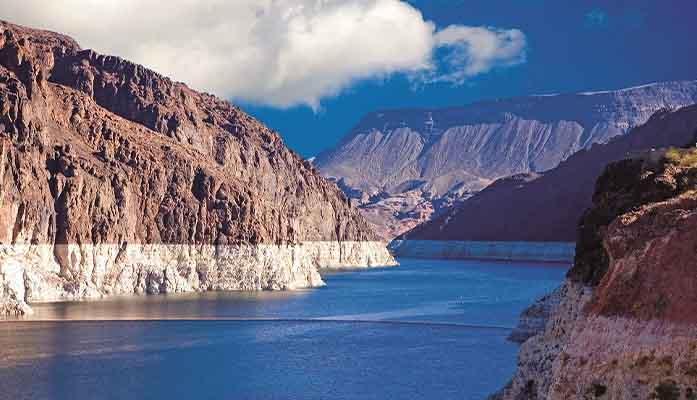
Conditions across the system have deteriorated during the prolonged drought. The Bureau of Reclamation reported in August that the combined contents of Lake Powell and Lake Mead had fallen to levels not seen since Lake Powell began filling in the 1960s.
The agency said the Basin has experienced an unprecedented drought for the past 26 years, with conditions worsening in 2026.
Biggs has been involved in several other Colorado River-related efforts this year.
In March, he led Arizona Republican members of Congress in raising concerns about the Bureau of Reclamation’s draft environmental review for post-2026 operations at Lake Powell and Lake Mead.
In April, Biggs joined Arizona Congressman Greg Stanton (D-AZ-04) in urging federal officials to release funding for drought-related projects across the Basin. Biggs later partnered with Nevada Congresswoman Dina Titus in seeking additional Colorado River funding as part of an emergency funding package.
The most recent legislation places an emphasis on expanding water supplies and infrastructure throughout the Basin. Biggs said the proposal is intended to provide greater long-term certainty for communities and agriculture rather than relying solely on reductions in existing water use.
“We must think big, be leaders, and deliver real solutions that will bring relief for decades to come,” said Biggs. “I urge my colleagues to act quickly and send this legislation to the President’s desk.”
Ethan Faverino is a reporter for AZ Free News. You can send him news tips using this link.