K-12 superintendents are the CEOs of public schools, spearheading a cabinet of professionals who manage district resources and implement safety and academic programs. Superintendent qualifications may include a doctorate of philosophy (Ph.D.) or education (Ed.D.) and some experience in finance, communications, and organizational leadership.
Superintendents are paid exorbitant salaries topping close to $1 million, depending on the district size. This amount does not include performance bonuses, work vehicles, mobile devices, or lavish vacation packages—er, I mean, “out-of-state professional development conferences.” Whether superintendents do good or evil, employment agreements stipulate that they receive full compensation and benefits, largely at the taxpayers’ expense.
Arizona public schools are home to some of the most ethically challenged and morally questionable high-level administrators. K-12 superintendents across the Valley primarily care about aesthetics and the “business of the district.” Below is an incomplete list of superintendents with controversial reputations, alongside the elected officials who bow to their almighty paper-pushing agenda.
Newly hired Higley USD Superintendent David Loutzenheiser now sits on the dais with governing board members, leaving his cabinet on the floor. This arrangement was approved by the purple-haired board president, Amanda Wade, who once advocated for striking the word “immoral” from teacher-student communication policies. Radical board member Tiffany Schultz—who once declared that professional dress codes “sexualize children’s bodies”—backed Wade’s decision to disrupt the chain of command. No one but Loutzenheiser benefited from this stunt. He set a bad precedent for what’s to come. Read more in AZ Free News.
Earlier this year, a resident in the Cartwright Elementary School District sued two board members for nepotism, citing A.R.S. 15-421. Cassandra Hernandez (elected at age 19) is the daughter of board president and state representative Lydia Hernandez (D). Despite using different addresses on their campaign applications, constituents cried foul and called for their resignations. The Hernandezes led a charge to install the disgraced former Maricopa County Superintendent Steve Watson as district superintendent. Watson is accused of fraud and leaving behind an infestation of financial deficits, lawsuits, and dysfunction in the county office. Cartwright residents have no reason to expect Watson will leave their district any better than he found it.
Deer Valley USD residents constantly complain across social media about Superintendent Curtis Finch’s dismissive “leadership” style. Residents are also suspicious of Finch’s camaraderie with board president Paul Carver, who once told a room full of conservatives that Finch is the best superintendent in the state. Both men support a twice-failed ballot measure that would allow the district to exceed its budget. Finch defended the 15% override, stating: “The anti-public school movement is growing here in Arizona, which is a crime against humanity.” Whether or not good things are happening in DVUSD is up for interpretation, but declining enrollment numbers are the telltale sign of a district in freefall. Go Parents!
No list of sketchy superintendents is complete without Scottsdale USD’s Scott Menzel. He is a freak show in his own right, accounting for the majority of the district’s media exposure. Menzel is widely known for shaming white people who don’t feel guilty about their skin color. Before vacating their seats, debased board members Zach Lindsay, Libby Hart-Wells, and Julie Cienawski extended Menzel’s contract through 2025. Under his “leadership,” SUSD chartered more student-led sexuality clubs, adopted an anti-police curriculum, and circulated hundreds of pornographic books in school libraries. As a result, in 2024, the Arizona School Administrators organization proudly named Menzel the National Superintendent of the Year (this title must be reserved for clowns).
Peoria USD has a slightly better handle on its administration problem since board president Heather Rooks removed Superintendent K.C. Somers from the dais. This establishes a clear separation of employer and employee while respecting the expertise each brings to the district. Unfortunately, though, Somers is developing a reputation for operating in subtle forms of manipulation and subversion, as if he’s trying to sabotage the board members he can’t control. I once attended a meeting where Somers yowled at board members when they ripped off the COVID-19 funding band-aid. Interestingly, before coming to Arizona, Somers was the superintendent of a Colorado school district steeped in scandal and cover-up. He would do well to note that PUSD residents won’t sit for that.
(Dis)honorable Mentions: Tolleson Union HS Superintendent Jeremy Calles morally and financially bankrupted his district. Former Mesa Public Schools Supt. Andi Fourlis oversaw an untold number of social gender transitions without parental knowledge. Tucson USD Supt. Gabriel Trujillo encouraged and attended a student-led drag show on campus, even after one teen was sexually abused by a high school counselor who organized the opening event. Chandler USD Supt. Frank Narducci declared a “week of kindness” and distributed 9-1-1 stickers after unchecked bullying led to one student’s murder and another student’s suicide. There’s more, but we’re out of time.
Those who can’t get elected apply for high-power jobs. Most K-12 superintendents have no campaign grit and no winning personality. Thus, they depend on compromised board members to execute their agenda. Superintendents don’t represent the whole community—they represent the educated community. They may be intellectual experts, but they don’t swear an oath to the U.S. Constitution, and they are not the final governing authority.
The board of education—elected officials who report to taxpayers (that’s you!)—hires the superintendent, and they ultimately decide what to approve or reject. No one is demanding perfection. Arizona families simply want integrity, transparency, and common sense. K-12 community members who experience dissatisfaction with bloated, overcompensated administrative teams should call, email, request meetings, alert the media, and speak at school board meetings. When superintendents refuse to operate within the scope and ability of their job description, expose them.
The Scottsdale Unified School District (SUSD) Governing Board approved a bonus of nearly $16,000 to its superintendent during an August board meeting, despite lower test scores. And during last week’s meeting, it approved another performance pay plan for the 2024-2025 school year.
Superintendent Scott Menzel will receive a bonus of over $15,700, despite not achieving any of the academic achievement goals for the 2023-2024 school year. Menzel has a base salary of $225,000, a $16,000 stipend, and opportunity for a 20 percent bonus (around $43,200).
That full 20 percent bonus hinged on accomplishing the 11 key performance indicators the board set for the 2023-2024 school year. Menzel accomplished five of the 11 goals, none of which were academic: increased attendance rate to 92.5 percent or better, increased percent of students participating in extracurricular and cocurricular activities by four percent; increased certified staff retention; established a baseline for work-based learning opportunities and hours completed using Major Clarity; and produced decision-making matrix and at least one proposal for action by June 30.
The academic-based performance pay goals that Menzel didn’t meet concerned increasing scores for third-grade English-Language Arts (ELA) students to 68 percent passing, eighth-grade math students to 53 percent passing, and ninth-grade science students to 41 percent passing. During the 2023-2024 school year, only 60 percent of third-grade ELA students passed, 46 percent of eighth-grade math students passed, and 34 percent of ninth-grade science students passed.
The governing board was divided over the new performance pay plan. Board President Libby Hart-Wells and members Zach Lindsay and Julie Cieniawski voted in favor, while members Amy Carney and Carine Werner abstained.
During the meeting, Carney questioned why there was no board discussion prior to Menzel’s proposed performance plan pay raise being included as an action item on last week’s agenda.
“Last [year] we had a lengthy discussion [and] came to a collaborative result, and then we had an action item later,” said Carney.
Hart-Wells didn’t deny that the procedure for proposing a superintendent pay raise plan had changed from last year, but said that Carney and other members were free to discuss the action item and propose changes.
“It has always been the case that the superintendent has drafted the goals based on the information provided by the board and the goals that were set related to the key performance indicators for the district, then that comes forward to the governing board for review,” said Menzel.
During that same meeting last week, the board’s budget presentation revealed that SUSD spending on classrooms and teachers would hit a historical low again for the 2024-2025 school year: 54 percent versus nearly 64 percent exactly 20 years ago per the auditor general. That is one percent away from the lowest fiscal year: 53 percent in 2017.
As the parent watchdog group Scottsdale Unites For Education Integrity said in a recent press release, “This 9.2 percent decrease means that, out of a $438 million budget, over $40 million has been redirected away from supporting students’ academic achievement.”
Correction: A previous version of this story said thatMenzel’s bonus was approved last week. It was approved in August while the performance pay plan was approved last week. The story has been corrected.
AZ Free News is your #1 source for Arizona news and politics. You can send us news tips using this link.
Scottsdale Unified Board Member Libby Hart-Wells appears to have used her position to bypass the Code of Conduct Committee, pressing top district administrators to remove ‘navel’ from the list of body parts that students must cover at school.
Due to Hart-Wells’ actions, Scottsdale’s Chaparral High School began the 2024-2025 school year by featuring on social media a female student wearing a bra top and low-cut jeans, with her entire torso exposed.
Although Hart-Wells’ actions occurred in 2022, parents are only now becoming aware of them due to newly obtained public records. These records reveal Hart-Wells’ growing frustration when staff did not promptly comply with her request to permit midriff shirts. In fact, SUSD staff members told Hart-Wells that they wished to honor the work of the Code of Conduct Committee, however, that message did little to sway Hart-Wells from pursuing her personal agenda.
None of Hart-Wells’ emails indicated that she consulted parents, committee members, or her fellow board members about her plans to modify the policy on students’ acceptable dress.
“It’s clear that board member Hart-Wells does not respect the district or parents or have our students’ best interest in mind. We need school board members who prioritize academics and respect parents’ involvement in their kids’ lives. We need family-friendly school board candidates Gretchen Jacobs, Jeanne Beasley and Drew Hassler,” stated a concerned SUSD parent.
🧵 Newly received documents indicate that Scottsdale Board Member Libby Hart-Wells badgered SUSD staff via email regarding a dress code policy change that she personally desired.
— Scottsdale Unites for Educational Integrity (@ScottsdaleUnite) August 22, 2024
The district emails reveal that, without providing evidence, Hart-Wells asserted, “I did get some student feedback.”
“Please know I press this issue not for myself or as any slight to the committee’s work, but for the students and the learning environment,” wrote Hart Wells. In yet another email, she stated, “I have requested your reconsideration more than once but remain without a substantive response” after the district didn’t acquiesce to her demands.
District emails also show that Assistant Superintendent Milissa Sackos and Director of Support Services Shannon Cronn pushed back on the change internally, and that the district’s cabinet concluded that the modification should not be made. Sackos decried Hart-Wells’ request as “contrary to the committee recommendations after including, without limitation, a discussion with cabinet and school-level administrators.”
Ultimately, Superintendent Menzel instructed staff, “I agree we should do this and hopefully include it on the October 18th consent agenda.” A private memo to governing board members dated October 14, 2022, states “this request was discussed with several stakeholder groups.” Public records show the “stakeholder groups” were only Hart-Wells.
At the October 18, 2022, board meeting, without any public discussion to indicate that the code of conduct had been modified, board members Zach Lindsay, Julie Cieniawski, Libby Hart-Wells, and Patty Beckman approved the revised 80-page Code of Conduct, which was now lacking the word ‘navel.’
That’s what you’re getting from your school board members, Scottsdale. It’s time for a change this November.
Scottsdale Unified School District (SUSD) failed to pass a gender-neutral bathroom policy during its special meeting on Tuesday night.
The board tied 2-2 in their vote on the policy, which would have established single-stall, gender-neutral bathrooms or provided designated employee restrooms for students unwilling or unable to use a multi-occupancy restroom. The bathroom policy came about after allegations that some SUSD schools were allowing restroom access based on gender identity and not biological gender.
Board member Amy Carney and Vice President Carine Werner voted for the policy, while board members Libby Hart-Wells and Zach Lindsay voted against it. Board President Julie Cieniawski wasn’t present at the meeting, so she didn’t vote.
Hart-Wells said that the “how” and “why” of the policy were problematic: the cost and the implementation. Hart-Wells said that available district data proved that site administrators were already handling the .001 percent of student requests for bathroom accommodations.
In closing, Hart-Wells indicated that some parents were the greater danger to children, but didn’t expand further.
“The proposal puts forth a bastardization of parent’s rights at the very expense of the very students’ rights that this proposal purports to support. The operational reality of this proposal can — whether intended or not — put some children in harm’s way. And yes, tragically, that harm can come from the home,” said Hart-Wells. “This proposal, in my view, does not represent healthy governance.”
Werner responded that supportive parents have indicated to her that it was about the children, not about the adults.
Werner requested the new policy. The proposed financial impact would’ve been about $70,000 total: five restrooms per school, with each restroom estimated to cost $500 each.
“I’m certain that kids’ academic achievement is affected when they feel like they can’t use the restroom,” said Werner.
Some parent and community activists expressed grievance over the rejection of the policy.
The SUSD bathroom accommodation policy failed in a 2-2 vote last night, with Hart-Wells claiming that involving parents hurts students' rights and puts children in harm's way. https://t.co/WcALn8dCfvpic.twitter.com/bMQiIWvNJY
— Scottsdale Unites for Educational Integrity (@ScottsdaleUnite) October 25, 2023
Over the summer, Gov. Katie Hobbs vetoed legislation similar to SUSD’s failed policy. The bill, SB1040, would have required students to have the option to access a single-occupancy or employee restroom or changing facility.
Hobbs declared that such accommodations were discrimination against LGBTQ+-identifying minors.
“SB 1040 is yet another discriminatory act against LGBTQ+ youth passed by the majority at the state legislature. [I] will veto every bill that aims to attack and harm children,” said Hobbs.
Corinne Murdock is a reporter for AZ Free News. Follow her latest on Twitter, or email tips to corinne@azfreenews.com.
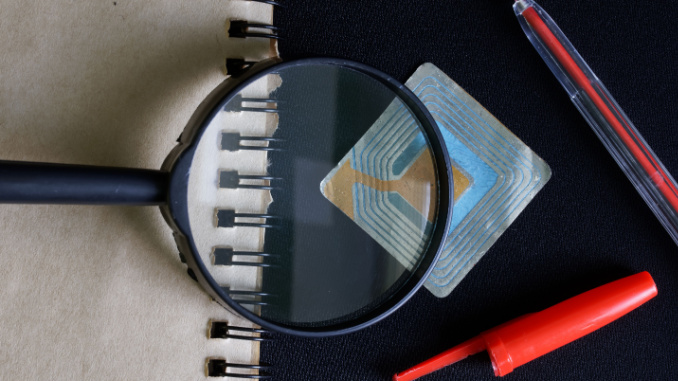
This school year, Scottsdale Unified School District (SUSD) incorporated controversial RFID chip trackers in student and faculty ID badges.
The district approved the chips in a close 3-2 vote in late June. Board members Libby Hart-Wells, Zach Lindsay, and Julie Cieniawski approved the chips; Amy Carney and Carine Werner opposed them. The estimated cost of the chips totaled $125,000.
The chip went through a trial run at Coronado High School before being implemented districtwide. The district reportedly upgraded their ID software to enable the chip system over the last two years.
During the June meeting, the SUSD governing board counsel explained that the chips enable the district to track students when they get on and off the buses.
Carney asked why the chips were put in all student IDs, and not just bus riders. The SUSD Safety & Security team, which will oversee the program, explained that buses aren’t limited to designated bus riders: any students may board the buses if they’re attending the Boys & Girls Club, field trips, or extracurricular or athletic events.
The safety team reported that the IDs can’t be used to track daily attendance because they’re only linked to the district’s transportation software. However, the team didn’t guarantee that the chip technology wouldn’t be expanded to other uses such as attendance in the future. The RFID chips within staff badges have an extra feature: they enable access to school buildings.
SUSD reported that the RFID chip doesn’t store any personally identifiable information, and that no RFID readers were installed inside the school for the purpose of tracking a student’s location.
Director Joshua Friedman said that the RFID chip translates as a coded number within a closed system, and therefore doesn’t qualify as a digital ID. Friedman also noted that the RFID chip doesn’t work as an active GPS tracker, but a passive one: the chips only record a time and location when a student boards or disembarks from a school bus.
Board President Julie Cieniawski remarked in closing that she and the majority of SUSD leaders weren’t interested in “conspiracy theories” of using RFID technology for ulterior motives.
Some SUSD parents have expressed concern with the tracking capabilities of the RFID chips, namely the inability to opt-out from the technology and potential suspensions for tampering with the IDs by attempting to remove the chip.
🚨🚨@ScottsdaleUSD does it again! After 3-2 board vote, SUSD implements RFID chip cards without parental consent. Suspension if tampered with. No opt-in. No opt-out. pic.twitter.com/P5nCUTWHnr
— TheLegalProcess (v2.0 | Post-Election Ed) (@ALegalProcess) August 13, 2023
Former state lawmaker and SUSD teacher Michelle Ugenti-Rita wrote on Facebook that the RFID chips were an invasion of privacy.
“Have they never heard of ‘Find my iPhone?’ This is a complete invasion of privacy. Parents were never notified, or given the option to opt-in to the school district’s new government surveillance program,” said Ugenti-Rita. “What didn’t they learn from masking up our children during COVID? This is something our superintendent, Tom Horne, should investigate and the Legislature should ban when they convene next year.”
No opt-out exists for families who desire to forgo use of the chips. RFID, short for radio-frequency identification, is a technology that allows scanners to engage in automatic identification and data capture (AIDC). AIDC allows for computers to obtain data immediately without human involvement; other types of AIDC include QR codes and voice recognition technology.
During last week’s meeting, Superintendent Scott Menzel said that the chip readers enable the district to locate students using school transportation. Menzel reported that on the first day of school, three children didn’t arrive at their proper location. The superintendent reported that the ID system enabled them to locate them within five minutes, as opposed to 30 minutes or more.
In response to community pushback against the chips, SUSD issued a press release on Monday to further explain the RFID software.
“RFID is not a global positioning system (GPS) and has no tracking capability on its own. Like the RFID in your credit card and debit card, it only works when tapped. The district piloted this program last year and the Governing Board approved it,” stated SUSD. “The RFID in student ID cards is ONLY scanned so that the district’s Transportation department is able to account for those students who board and exit a bus.”
Corinne Murdock is a reporter for AZ Free News. Follow her latest on Twitter, or email tips to corinne@azfreenews.com.