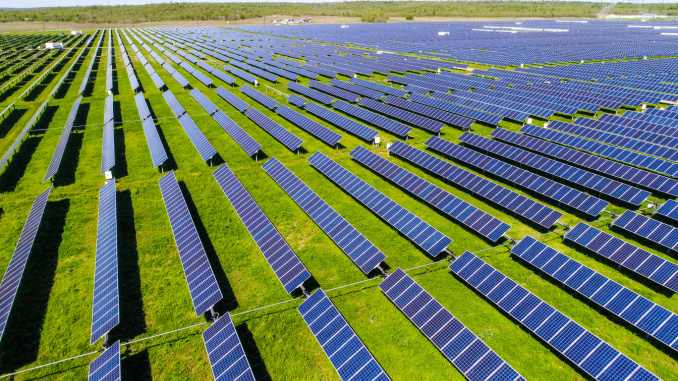
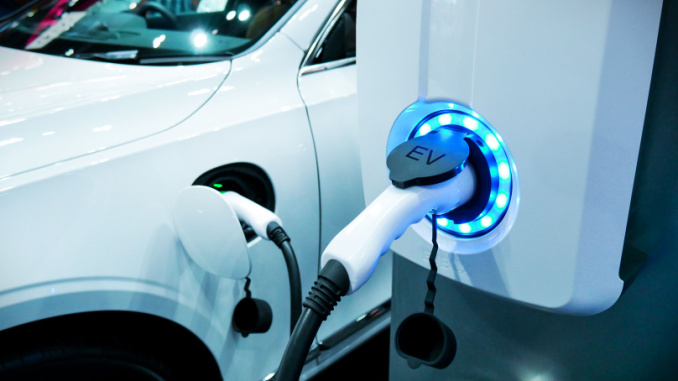
Just a few years ago, ESG was all the rage in the banking and investing community as globalist governments in the western world focused on a failing attempt to subsidize an energy transition into reality. The strategy was to try to strangle fossil fuel industries by denying them funding for major projects, with major ESG-focused institutional investors like BlackRock and State Street, and big banks like J.P. Morgan and Goldman Sachs leveraging their control of trillions of dollars in capital to lead the cause.
But a funny thing happened on the way to a green Nirvana: It turned out that the chosen rent-seeking industries — wind, solar and electric vehicles — are not the nifty plug-and-play solutions they had been cracked up to be.
Even worse, the advancement of new technologies and increased mining of cryptocurrencies created enormous new demand for electricity, resulting in heavy new demand for finding new sources of fossil fuels to keep the grid running and people moving around in reliable cars.
In other words, reality butted into the green narrative, collapsing the foundations of the ESG movement. The laws of physics, thermodynamics and unanticipated consequences remain laws, not mere suggestions.
Making matters worse for the ESG giants, Texas and other states passed laws disallowing any of these firms who use ESG principles to discriminate against their important oil, gas and coal industries from investing in massive state-governed funds. BlackRock and others were hit with sanctions by Texas in 2023. More recently, Texas and 10 other states sued Blackrock and other big investment houses for allegedly violating anti-trust laws.
As the foundations of the ESG movement collapse, so are some of the institutions that sprang up around it. The United Nations created one such institution, the “Net Zero Asset Managers Initiative,” whose participants maintain pledges to reach net-zero emissions by 2050 and adhere to detailed plans to reach that goal.
The problem with that is there is now a growing consensus that a) the forced march to a green energy transition isn’t working and worse, that it can’t work, and b) the chances of achieving the goal of net-zero by 2050 are basically net zero. There is also a rising consensus among energy companies of a pressing need to prioritize matters of energy security over nebulous emissions reduction goals that most often constitute poor deployments of capital. Even as the Biden administration has ramped up regulations and subsidies to try to force its transition, big players like ExxonMobil, Chevron, BP, and Shell have all redirected larger percentages of their capital budgets away from investments in carbon reduction projects back into their core oil-and-gas businesses.
The result of this confluence of factors and events has been a recent rush by big U.S. banks and investment houses away from this UN-run alliance. In just the last two weeks, the parade away from net zero was led by major banks like Goldman Sachs, Morgan Stanley, Citigroup, Bank of America, Wells Fargo, and, most recently, JP Morgan. On Thursday, the New York Post reported that both BlackRock and State Street, a pair of investment firms who control trillions of investor dollars (BlackRock alone controls more than $10 trillion) are on the brink of joining the flood away from this increasingly toxic philosophy.
In June, 2023, BlackRock CEO Larry Fink made big news when told an audience at the Aspen Ideas Festival in Aspen, Colorado that he is “ashamed of being part of this [ESG] conversation.” He almost immediately backed away from that comment, restating his dedication to what he called “conscientious capitalism.” The takeaway for most observers was that Fink might stop using the term ESG in his internal and external communications but would keep right on engaging in his discriminatory practices while using a different narrative to talk about it.
But this week’s news about BlackRock and the other big firms feels different. Much has taken place in the energy space over the last 18 months, none of it positive for the energy transition or the net-zero fantasy. Perhaps all these big banks and investment funds are awakening to the reality that it will take far more than devising a new way of talking about the same old nonsense concepts to repair the damage that has already been done to the world’s energy system.
David Blackmon is a contributor to The Daily Caller News Foundation, an energy writer, and consultant based in Texas. He spent 40 years in the oil and gas business, where he specialized in public policy and communications.
The Arizona Free Enterprise Club released a statement on Wednesday severely criticizing the Arizona Corporation Commission (ACC). The statement came after the ACC, which is charged with protecting Arizonans from a non-competitive energy industry, voted to abdicate its duty by allowing formulaic rates that increase automatically year over year, as opposed to every increase being subject to public scrutiny and requiring approval.
The vote on Tuesday was carried 3-2 with commissioners Anna Tovar and Lea Márquez Peterson dissenting. According to the ACC, its policy statement “allows regulated utilities to propose formula rates in future rate cases. Under this approach, the ACC reviews and accepts as the rate a formula for calculating the utility’s cost of service, including clear definitions of inputs to that formula and a process for updating rates every year as the utility’s costs change.”
The commission claimed, “Formula rates will still be monitored closely to ensure that the utility does not over-earn relative to the cost of service for providing service (plus a reasonable return on invested capital), while continuing to provide service safely and reliably.”
The Arizona Free Enterprise Club responded in a statement saying:
“Following contentious double digit rate hikes being approved and ESG Resource Plans committed to going ‘Net Zero’ by 2050 being rubber stamped, the Commission has rushed through approving new rules masquerading as a mere ‘policy statement’ that could insulate utilities and the Commission from having to face ratepayers in future rate cases. The ‘policy statement’ would depart from traditional rate making and pursue ‘formula based rates’ offloading risk from investors to ratepayers and baking in automatic rate increases with little transparency or opportunity for ratepayer engagement.
“The only support for this ‘policy statement’ came from the utilities themselves. The Commission is charged to protect ratepayers by regulating the utilities, not the other way around. The Commission should pump the brakes, not rush through major rulemaking decisions in a lame duck session.
“The Arizona Free Enterprise Club is committed to protecting ratepayers, ensuring affordable and reliable energy in Arizona. We will continue to work to ensure utilities will not be able to force their captive ratepayers to foot the bill, especially through automatic rate hikes, for their costly goal to go ‘Net Zero’ by 2050 by shuttering reliable sources of energy generation to build out expensive and unreliable wind, solar, and battery storage projects.”
Attorney Dan Pozesfsky of Arizona’s Residential Utility Consumer Office (RUCO), expressed a similar view according to 12News saying, “Trying to implement formula rates through a policy statement rather than through rules is inappropriate, illegal and in this case denies due process.”
The outlet reported that the ACC, ignoring its own plans for the vote, rushed to schedule it noting that in a previous meeting Commission Chairman Jim O’Connor had told stakeholders, “Give us feedback. Bring us guardrails.” He added, “I eagerly look forward to that kind of input at our next workshop.” However, no workshop occurred and no published legal opinions were issued.
Diane Brown of the nonprofit Arizona PIRG Education Fund stressed that the vote was conducted with critical questions about the scheme remaining unanswered. She said, “This is precisely to me why it was so important to have the legal memo that this Commission said they would get. While there are statements that there will be increased transparency, I’m not seeing evidence of that. It is troubling to me that we haven’t heard from the ALJ (administrative law judge). We have not heard from Staff.”
During his debate with former President Donald Trump, President Joe Biden claimed: “The only existential threat to humanity is climate change.” What if I told you that it is not climate change but climate policies that are the real existential threat to billions across our planet?
The allure of a green utopia masks the harsh realities of providing affordable and reliable electricity. Americans could soon wake up to a dystopian future if the proposed Net Zero and Build Back Better initiatives — both aimed at an illogical proliferation of unreliable renewables and a clamp down on dependable fossil fuels — are implemented.
Nowhere is this better reflected than in remote regions of India where solar panels — believed to provide clean and green energy — ultimately resulted in being used to construct cattle sheds.
The transformation of Dharnai in the state of Bihar into a “solar village” was marked by great enthusiasm and high expectations. Villagers were told the solar micro-grid would provide reliable electricity for agriculture, social activities and daily living. The promise engendered a naïve trust in a technology that has failed repeatedly around the world.
The news of this Greenpeace initiative quickly spread as international news media showcased it as a success story for “renewable” energy in a third world country. CNN International’s “Connect the World” said Dharnai’s micro-grid provided a continuous supply of electricity. For an unaware viewer sitting in, say, rural Kentucky, solar energy would have appeared to be making great strides as a dependable energy source.
But the Dharnai system would end up on the long list of grand solar failures.
“As soon as we got solar power connections, there were also warnings to not use high power electrical appliances like television, refrigerator, motor and others,” saida villager. “These conditions are not there if you use thermal power. Then what is the use of such a power? The solar energy tariff was also higher compared to thermal power.”
A village shopkeeper said: “But after three years, the batteries were exhausted and it was never repaired. … No one uses solar power anymore here.” Hopefully, the solar panels will last longer as shelter for cows.
Eventually, the village was connected to the main grid, which provided fully reliable coal-powered electricity at a third of the price of the solar power.
Dharnai is not an isolated case. Several other large-scale solar projects in rural India have had a similar fate. Writing for the publication Mongabay, Mainsh Kumar said: “Once (grid) electricity reaches unelectrified villages, the infrastructure and funds used in installation of such off-grid plants could prove futile.”
While green nonprofits and liberal mainstream media have the embarrassment of a ballyhooed solar project being converted to cattle shed, conventional energy sources like coal continue to power India’s over 1.3 billion people and the industries their economies depend on.
India saw a record jump in electricity demand this year, partly due to increased use of air conditioning units and other electrical appliances as more of the population achieved the financial wherewithal to afford them. During power shortages, coal often has come to the rescue. India allows its coal plants to increase coal stockpiles and import additional fuel without restrictions.
India will add more than 15 gigawatts in the year ending March 2025 (the most in nine years) and aims to add a total of 90 gigawatts of coal-fired capacity by 2032.
Energy reality is inescapable in a growing economy like India’s, and only sources such as coal, oil and natural gas can meet the demand. Fossil fuels can be counted on to supply the energy necessary for modern life, and “green” sources cannot.
India’s stance is to put economic growth ahead of any climate-based agenda to reduce the use of fossil fuels. This was reaffirmed when the country refused to set an earlier target for its net zero commitment, delaying it until 2070.
The story of Dharnai serves as a cautionary tale for the implementation of renewable energy projects in rural India, where pragmatism is the official choice over pie in the sky.
Vijay Jayaraj is a contributor to The Daily Caller News Foundation and Research Associate at the CO2 Coalition, Arlington, Virginia. He holds a master’s degree in environmental sciences from the University of East Anglia, UK.
The whole “net-zero by 2050” narrative that cranked up in earnest in early 2021 has now become a public relations problem for the climate-alarm movement, according to a senior official at the United Nations.
Chris Stark, the outgoing chief executive of the UN’s Climate Change Committee (CCC), said as reported by the Guardian: “Net zero has definitely become a slogan that I feel occasionally is now unhelpful, because it’s so associated with the campaigns against it. That wasn’t something I expected.”
As seems to always be the case among the globalist sponsors of this government-subsidized rush to saddle the world with unreliable power grids and short-range electric cars, the conversation among the leaders of the movement immediately moves not to perhaps reconsidering the approach to address public concerns, but to rejiggering the narrative. Stark recommends shifting the label and the narrative to more of a focus on investment and how renewables and EVs somehow improve energy security.
“We are talking about cleaning up the economy and making it more productive – you can call that anything you like,” he said.
That would be a neat trick, inventing a narrative about benefits that don’t really exist. But it wouldn’t be the first time it’s been tried.
At last November’s COP 28 conference, UN Secretary General Antonio Guterres floated the term “climate collapse” as a new name for what the climate alarmists have successively called “global warming,” “climate change,” “climate crisis,” and “climate emergency.” Each successive label has been replaced as its cache’ with the public has faded; and apparently the whole “climate emergency” has lost its punch, so another fright narrative must be concocted.
The trouble there, of course, is that the climate is not collapsing. But then again, it isn’t in any sort of an emergency, either, or a crisis.
The climate is always changing, though, so at least the long-abandoned “climate change” label had the ring of truth to it. Maybe let’s go back to that and try to deal with something that is at least a real thing? But, no, that would cut down on the alarm and make it harder for political leaders to enact bad “solutions” and subsidize them with debt combined with skyrocketing utility bills for average citizens.
So, as Stark says, call it anything you want, just so long as it is alarming. Stark’s boss at the UN, Guterres, used the term “global boiling” to describe the current climate situation. So, maybe we change “net-zero by 2050” to “no bubbles by 2050.” That would at least have the advantage of some semblance of consistent thought.
A colleague suggested that we simply change the problematic label to “Stone Age,” since that is where we are heading if the alarmists continue to get their way. She has a point.
The most amazing thing about Stark’s concerns is that anyone is really surprised that “net-zero by 2050” has become a problematic term. How else would officials at the UN and other governments expect the public to react to what has become the umbrella label for a set of authoritarian government actions that have destabilized power grids, caused the cost of living to rise rapidly, reduced consumer choice, and begun to rob citizens in nominally “free” countries of their individual rights?
The central problem today with this climate change narrative is that it has gone on for so long that is has become a bit of a joke with an increasingly aware and skeptical public. And the reason they’re skeptical is not due to any disbelief in science, as the alarmists invariably claim, but because they have seen nothing but bad outcomes and personal deprivations from the alleged solutions being subsidized into existence.
Stark assures us that, “the lifestyle change that goes with this is not enormous at all,” but painful results to date tell another story.
If Stark were truly thoughtful and serious about wanting to deal with the increasing unpopularity of the “net-zero by 2050” construct, he would suggest that everyone take a step back and re-evaluate the nature and effectiveness of the solutions being pushed.
By merely advocating for the concoction of yet another shift in the narrative, a troublesome lack of sincerity is laid bare.
David Blackmon is a contributor to The Daily Caller News Foundation, an energy writer, and consultant based in Texas. He spent 40 years in the oil and gas business, where he specialized in public policy and communications.
The Great Climate Change Revolution is headed for failure. You can tell because it was already in big trouble before the ultimate heavy lifting even started.
International accords, (i.e. Paris Agreement) passed with great fanfare to ensure cooperation on emissions reductions, are ignored by most of the signers, notably China. Consumers worldwide are balking at increased energy prices. Unsold EVs are piling up.
All this resistance is occurring well before the full rollout of the regulations and restrictions needed to achieve zero net carbon emissions by 2050, the agreed-upon goal of climate activists worldwide.
It may not seem at first glance like the climate change movement is struggling. After all, mainstream dogma still holds that man-made warming has us careening toward disaster, possibly an uninhabitable planet. The only solution is to “just stop oil” along with coal and gas.
As John Kerry explains, there is no alternative. Biden’s proposals have nothing to do with politics nor ideology. “It’s entirely a reaction to the science, to the mathematics and physics that explain what is happening.”
It was no surprise, then, when Biden officials recently rolled out new CO2 emissions requirements, maintaining the same endpoint by 2032. The only way for auto makers to comply would be for gas-powered cars to comprise only 30% of new car sales.
But there’s a telling detail. The 2030 requirements have been relaxed, which means that they’re still going to put the squeeze on to force more EV sales, just not right now. But what’s going to change to make regulations more palatable in 2032 than in 2030? There’s no evidence that the demand for EVs will be greater or that consumers will be more interested in purchasing them.
EVs were envisioned as the cutting edge of the “zero by fifty” campaign. If we could replace the outmoded, smoke-belching anachronisms on the roads with sleek new vehicles lacking tailpipe emissions, the new atmospheric standards would be a piece of cake.
But there are problems. Consumers aren’t wild about EVs. After years of the feds promoting them and subsidizing them in every way thinkable, they still account for just 8% of new car sales.
They are still too expensive, refueling can be difficult and they have poor resale value. Moreover the giant batteries are a disposal nightmare. EVs increase soot pollution. Depending on the fuel source used to produce the electricity, they may produce no net carbon reduction anyway!
Yet the Biden administration soldiers on, insisting EVs can capture 70% of all sales within eight years. Hint: they can’t. Look for other accommodations to reality to be made. Meanwhile they are doing a lot of economic damage, for no possible benefit.
Americans are less caught up in climate panic than ever. Surveys revealed that of all the issues in this year’s election, voters rank climate change 10th in importance. “We’re number 10” may not make an inspiring campaign slogan, but the massive media, academic, and governmental infrastructure dedicated to its promotion means the climate change industry won’t disappear anytime soon.
As Swedish economist Björn Lomborg points out, climate change is a problem but only one of several mankind must grapple with. Meta-analysis of all scientific estimates shows climate change costs will likely average one percent of GDP across the century, a figure sure to be dwarfed by anticipated economic growth. Meanwhile, the proposed solutions insisted upon by the panic advocates will average $27 trillion annually or seven times more than the problem itself.
Costs aside, we lead better lives because of fossil fuels. Abundant energy has more than doubled lifespans, dramatically reduced hunger, and increased personal income tenfold. Climate related deaths from droughts, storms, floods, and fires have declined an astonishing 97% over the last century.
The worst thing we could do is to drive ourselves into poverty by “following the (false) science.” We need to stay economically and technically strong to be able to accommodate change as needed. Human beings do that, you know.
Dr. Thomas Patterson, former Chairman of the Goldwater Institute, is a retired emergency physician. He served as an Arizona State senator for 10 years in the 1990s, and as Majority Leader from 93-96. He is the author of Arizona’s original charter schools bill.