The city of Phoenix rolled out a new, equity-focused internet subsidy program this week using federal funding.
The Federal Communications Commission (FCC) issued a $700,000 grant through the $14 billion Affordable Connectivity Program (ACP). The funds will provide discounted internet of up to $30 off per month for most households but up to $75 off per month for tribal land households. Eligible households must be at or below 200 percent of federal poverty guidelines.
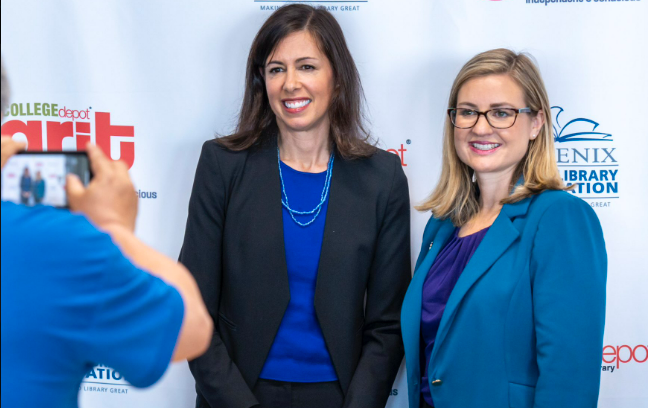
Phoenix Mayor Kate Gallego announced that 80,000 households were enrolled in the program, with an estimated additional 100,000 who could qualify.
The federal program also qualifies certain households for a one-time discount of up to $100 for a laptop, desktop computer, or tablet if they contribute anywhere between $10 to $15 toward the purchase.
Thank you for coming to Phoenix to help promote the Affordable Connectivity Program, @JRosenworcel! Every Phoenician deserves access to high-speed internet, regardless of zip code.
Those who qualify for other forms of federal welfare programs may also qualify for ACP.
Did you know? If you qualify for SNAP, Medicaid, WIC, Supplemental Security Income or other federal benefit programs you may be eligible to receive a monthly discount on your #broadband internet bill through the Affordable Connectivity Program. Learn more: https://t.co/0aTBbdST9L
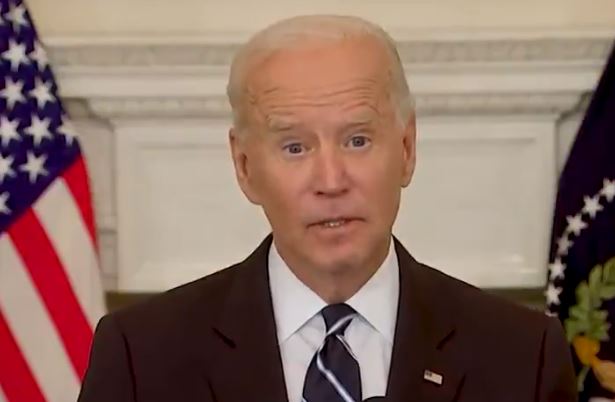
The Biden administration launched the ACP through the $1.2 trillion Bipartisan Infrastructure Law in November 2021. The administration brokered a deal with 20 of the nation’s main internet providers to offer ACP-eligible households internet plans for no more than $30 per month.
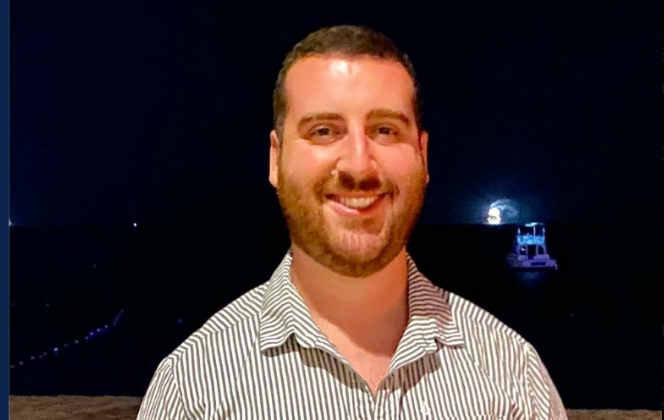
We're throwing it back to last year when our President @ALLO_Brad visited the White House to support the Affordable Connectivity Program.
Flash forward – we've provided more than 3,500 customers with no cost or discounted internet this year! 🤩 pic.twitter.com/vd9TAQKc6S
Effectively, ACP-eligible households get free internet initially if they sign onto the 20 internet providers that worked with the Biden administration. The providers are Allo Communications, altaFiber (Hawaiian Telecom), Altice (Optimum), Astound, AT&T, Breezeline, Comcast, Comporium, Cox Communications, Frontier, IdeaTek, Jackson Energy Authority, Mediacom Cable, MLGC, Spectrum, Starry, Verizon, Vermont Telephone Company, Vexus Fiber, and Wow! Internet, Cable and TV.
FCC Commissioner Jessica Rosenworcel presented the ACP grant in Phoenix on Wednesday.
Rosenworcel served as commissioner under both the Obama and Trump administrations. In a 2018 profile, the Washingtonian noted that Rosenworcel had continued her equity-oriented efforts through the Trump administration.
With the apparent lobbying efforts by these main internet providers to make ACP funding permanent, it appears that Biden’s arrangement for free internet is a limited-time offer. Nearly 18 million households have signed up for ACP.
On Tuesday, Verizon Senior Vice President Kathy Grillo warned that ACP funding was projected to run out as early as the first quarter of next year. Grillo urged for a more permanent subsidy structure for internet access.
Most internet providers set their contracts to last for a mandatory minimum of two years. The ACP subsidies will only last as long as funding is afforded to it.
Corinne Murdock is a reporter for AZ Free News. Follow her latest on Twitter, or email tips to corinne@azfreenews.com.
The University of Arizona Global Campus (UAGC) convinced a cop to take a social justice approach in his career, based on their online programming.
UAGC featured this police officer, Michael Ander, in an article praising his commitment to social justice. As UAGC noted, Ander was unfamiliar with the concept of social justice until he began taking university classes. UAGC initially described social justice as equality and fairness for all in their article, but then described equity-oriented implementation.
Equity proposes disparate treatment in order to achieve purportedly equal outcomes, unlike equality which proposes equal treatment that may result in unequal outcomes. Ander echoed that difference when defining social justice.
“Social justice seeks to understand the why,” said Ander. “Why people don’t have the same opportunities and why some people need more humanity than others.”
— UAGC – The University of Arizona Global Campus (@UAZGlobalCampus) April 28, 2023
As Britannica notes, “social justice” is comparative to an equity-oriented concept known as “distributive justice” — “the fair and equitable distribution of social, political, and economic benefits and burdens.”
Ander initially left community college in 2011 when he was accepted in the police academy. It wasn’t until recent years that he returned to finish his degree — not out of an unprompted desire to do so, but rather because he couldn’t advance any further in his career field without one. In order to rise above sergeant to become a lieutenant, Ander was required to obtain a bachelor’s degree.
UAGC gave Ander a full-ride scholarship in partnership with his former community college, Rio Salado College.
Ander received an online degree in UAGC’s Social and Criminal Justice program. As part of the program, students review the application of select social justice principles — equality, solidarity, and human rights — as well as apply knowledge of cultural sensitivity and diversity awareness to social and criminal justice.
One of the program chairs, Shari Schwartz, has tweeted in support of social justice policies such as gun control, Black Lives Matter, ending the death penalty, and allowing gender transitions for minors.
Narcissism at its worst: her daughter was suicidal for three years and it was inconvenient for her. Listen to her talk about herself and derogate her own daughter. https://t.co/K8uaCAaCH4
Worth watching. @RepTonyGonzales position on women’s reproductive rights irritates me but he supports gun control. Got censured by @GOP for it. @DanaBashCNN asked pointed questions and unlike many politicians, he answered directly. https://t.co/GK8jRDEpQ0
UAGC focuses heavily on expanding social justice perspectives. The university frequently hosts diversity, equity, and inclusion (DEI) events.
Forbes interviewed the UAGC chair of Forbes School of Business & Technology, Misty Resendez, about how social justice ideologies such as DEI are necessary components of education and leadership.
“My goal, my aspiration is to help educate leaders so they don’t fall to that dark side of leadership and to be aware, right, to help develop that self-awareness, that purpose-driven value leadership,” said Resendez.
Corinne Murdock is a reporter for AZ Free News. Follow her latest on Twitter, or email tips to corinne@azfreenews.com.
Jonathan Haidt is a professor at NYU, an acknowledged leader in the field of social psychology, and a champion of free speech. He recently faced a requirement that all scholars wishing to present research to the Society for Personality and Social Psychology were to submit a statement explaining “whether and how this submission advanced the equity, inclusion, and antiracism goals of SPSP.”
He resigned instead. This was no small sacrifice, but Haidt takes his principles seriously. Moreover, as he pointed out on his way out the door, “Most academic work has nothing to do with diversity.”
Scholars working, for example, on ultra-bright, nano-structured photo emission electron studies would be required to present their “anti-racist” bona fides. Academics in all disciplines, as well as administrators, would be forced to “betray their quasi-fiduciary duty to the truth by spinning, twisting or otherwise inventing some tenuous connection to diversity.”
This is not just another quibble among pointy-headed academics. Refusing jobs to dissenters is meant to quash the last remnant of open debate in American higher education.
Our universities, particularly the elite, were once celebrated as sanctuaries for unpopular ideas, where free discourse was sacrosanct and none need face fear of censure over doctrinal disputes.
But when the Left achieved numerical domination in the majority of universities over recent decades, their mindset evolved into rooting out the few dissenters in their midst, or, better yet, blocking them from getting a job in the first place.
The reason so-called anti-racists feel justified in forcing their views into unrelated disciplines, such as the hard sciences, is that they view the entire world through the lens of race. Ibram S. Kendi, the leading proponent of anti-racism, writes “there is no such thing as a non-racist or race-neutral policy.”
Their opinions on everything from raising taxes (good) to merit-based promotion in schools (bad) are race-based. It follows that if you disagree with their views, then you’re a racist.
The philosophy of anti-racism is profoundly anti-education and anti-merit. Colleges and universities are less and less committed to the search for truth or the transmission of knowledge. Instead, they are in thrall to the endless dictates of the ironically titled “social justice” bureaucracy.
DEI offices, larger than many academic departments (and better paid), are now sprouting in the halls of academia. 25% of all universities now mandate DEI statements from job applicants, and 40% more are considering jumping on the bandwagon.
DEI statements are loyalty oaths to race-based ideologies, similar to those required by authoritarian regimes throughout history. They often demand evidence of the applicant’s past support of such notions as Critical Race Theory, which holds that an individual’s tendency to racial bias can be reliably determined from their skin color.
To our state’s shame, Arizona’s universities have enthusiastically thrown themselves into the front lines of this movement. According to a Goldwater Institute report, Arizona State University last fall required DEI loyalty oaths for 81% of all job applicants. NAU was at 73% while the University of Arizona demanded 28% bend the knee to be considered for a job.
Such required ideological allegiance makes a mockery of the value of any research these aspiring scholars may do. The results are predetermined. In 2020, two major research organizations and 16 scientific societies issued a joint statement that researchers “must stand against the notion that systemic racism does not exist.” No research was cited.
Topics like urban crime, immigration, and welfare fraud are rarely studied when only the approved narrative is permitted anyway. Ignoring data inconsistent with the agenda gives us startling conclusions as when “scientists” proclaimed that family dinners and church services were COVID “superspreaders,” while massive racial protests and pro-abortion rallies were no problem.
The Left has a way with words. Diversity now means rigid conformity. Equity stands for unearned equal outcomes. Inclusion means exclusion of dissenters.
But Americans are starting to catch on. Outraged parents are protesting overt racism in school curricula. A growing number of universities and corporations are pulling back on DEI mandates. In Arizona, SCR 1024 is a proposed constitutional amendment that will hopefully be on the ballot next election. It would eliminate racist instruction in our public schools.
Take heart.
Dr. Thomas Patterson, former Chairman of the Goldwater Institute, is a retired emergency physician. He served as an Arizona State senator for 10 years in the 1990s, and as Majority Leader from 93-96. He is the author of Arizona’s original charter schools bill.
The Biden administration gave the city of Tucson $900,000 to build a biking and pedestrian bridge. The city’s initiative is one of 45 projects nationwide to receive a portion of $185 million in funds, the only one in Arizona to receive this round of funds.
The bridge would provide a pathway over the I-19 highway to Nebraska Street, as part of the Atravessando Comunidades Project. The funds will cover approximately 56 percent of the total project cost: $1.6 million in total.
The funds come from President Joe Biden’s Inflation Reduction Act (IRA) funds allocated to the Department of Transportation (DOT) Reconnecting Communities Program (RCP). In a press release issued on Tuesday, the DOT revealed that it prioritized projects it perceived as benefiting economically disadvantaged communities, as well as engaging in equity and environmental justice. The Environmental Protection Agency (EPA) and Department of Housing and Urban Development (HUD) assisted DOT in selecting which projects should get federal funding.
10 other Arizona cities, counties, and one nonprofit were denied the IRS funds.
The city of Winslow petitioned for $377,200 for a transportation study on railway-created barriers to mitigate lack of access and opportunities for impacted communities; the city of Eloy petitioned for $400,000 to plan for the revitalization of the Sunland Gin Corridor; Apache County petitioned for $1.28 million to reconstruct Stanford Drive (County Road 8235); Native Promise, a tribal advocacy nonprofit, petitioned for over $1.75 million to reconnect Navajo relocatees through the Pinta Project; the city of Buckeye petitioned for $420,000 for an overpass at Durango Street, over $1 million for road and bridge construction along Watson Road, and $724,000 to plan for Rooks Road and Baseline Road; the city of Bullhead petitioned for $1.6 million to improve a multimodal parkway; the city of Phoenix petitioned for over $5 million for a “cultural corridor”; the city of Kingman petitioned for over $40.8 million for a Rancho Santa Fe Parkway traffic interchange; and the city of Eloy petitioned for over $24.3 million for Sunland Gin Corridor construction.
The DOT explained that Tucson received the funding because of the project’s focus on equity. The project description stated that the predominantly Hispanic neighborhoods of South Tucson were cut off from the Santa Cruz River and the rest of Tucson by the I-19 highway in the early 1960s. The DOT claimed that these neighborhoods experienced over 60 years of air and noise pollution, surviving a food desert, and struggling from more limited economic opportunities.
This isn’t the first round of funding Tucson has received for a bridge. The Biden administration awarded the city $25 million to rebuild the 22nd Street bridge last August.
Today I welcomed @SecretaryPete and @SenMarkKelly to announce a $25M transformative investment in #Tucson's infrastructure. The re-envisioned 22nd Street Bridge will reconnect our communities and create safer ways for residents to drive, walk, bike, and move about. pic.twitter.com/EGOkWkp0om
Vanessa Gallego says, "the trucks from her family's business have to take a detour around it, wasting time." Our $25M investment in this Tucson bridge will make it easier & faster for trucks, school buses, & emergency vehicles to get where they need to go. https://t.co/bl7oSMMe7L
Last August, Buttigieg used the city of Tucson as the location for his major reveal of $25 million in funding through Rebuilding American Infrastructure with Sustainability and Equity (RAISE) grants. At the time, Buttigieg also cited equity as a reason for choosing Tucson as the recipient of these exclusive funds.
“It’s also important from an equity perspective because it connects the downtown Tucson and the communities and opportunities there to historically underinvested in communities to the east,” said Buttigieg.
Thank you @SecretaryPete for sharing the transformative work happening in #Tucson! With support from this $25M #RAISEgrant, the rebuilt 22nd Street Bridge will improve pedestrian/bicycle safety, allow access for buses/heavy vehicles & create economic opportunity. #BidenHarrishttps://t.co/Lk1cnyKh1p
Phoenix also received RAISE grants last year: $25 million for a bridge over the Rio Salado river connecting downtown Phoenix and South Phoenix, spanning along the river from Central Avenue to State Route 143 near the Phoenix Sky Harbor Airport.
Corinne Murdock is a reporter for AZ Free News. Follow her latest on Twitter, or email tips to corinne@azfreenews.com.
Racist policies have no business in Arizona. And in 2010, our state’s voters made that clear when they passed Proposition 107. This amendment to Arizona’s Constitution banned affirmative action programs in the state that were administered by statewide or local units of government, including state agencies, cities, counties, and school districts. But as we’ve become all too familiar with here in the U.S. and the state of Arizona, politicians and bureaucrats have figured out ways to skirt the language in our constitution. That’s led to where we are today.
Under the guise of words that sound harmless enough like “diversity,” “equity,” and “inclusion” (DEI), Critical Race Theory (CRT) and similar programs largely flew under the radar and have been used to indoctrinate our students. Floods of parents eventually caught on, making it their mission to stop the invasion of CRT and DEI in our school districts. And while the newly elected Superintendent of Public Instruction, Tom Horne, has already taken steps to stop such indoctrination in our schools, there’s more work to be done.