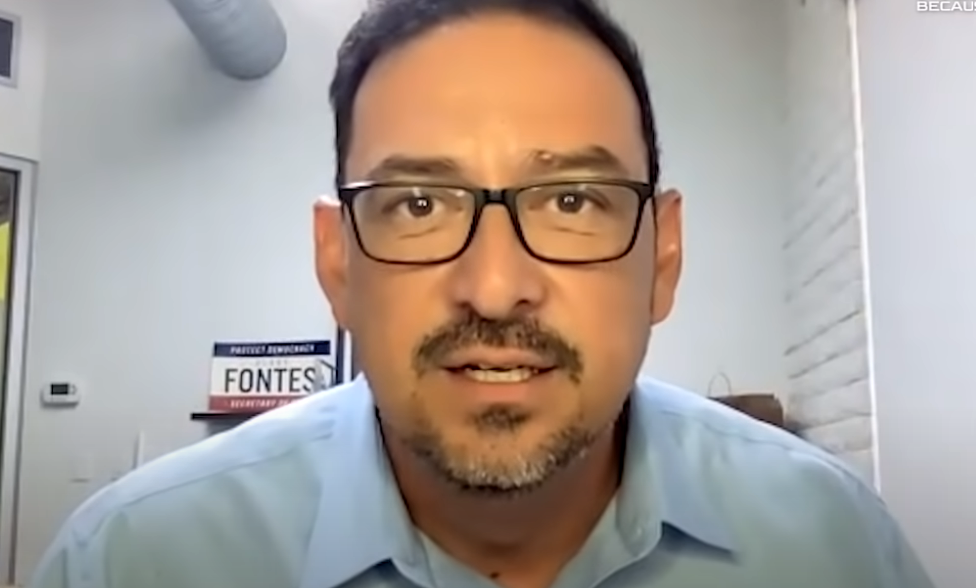
A Saturday night announcement from Arizona Secretary of State Adrian Fontes confirmed that the radical-left, “Eco-Socialist” Green Party’s eight candidates will be moving ahead with a write-in strategy for the November general election.
According to its website the Green Party advocates for “a just transition to a democratically controlled eco-socialist economy through a Green New Deal,” as well as “’Degrowth’ policies to reduce overproduction, overconsumption, and waste,” and espouses “Social Justice & Equality For All,” as well as “Feminism And Gender Equity.”
As reported by the Arizona Daily Independent, the write-in candidates were not included in the official Arizona primary canvass owing to a clerical error, citing an Aug. 17th press release from the Secretary of State’s office.
“A write-in candidate for a newly recognized political party must receive a plurality of the votes of the party for the office for which the candidate is competing for,” reads the press release. “A party with continued representation requires at least as many votes as they would have had petition signatures. The winning candidates in the Primary all receive certificates of nomination in the days after the canvass and these Green candidates who won their party nomination are included.”
Secretary Fontes also ran afoul of the Green Party earlier this month when he declared the wrong Green Party winner in the U.S. Senate primary as reported by KJZZ.
🚨 BREAKING: The AZ Secretary of State's is doing anything but restoring confidence in our elections!🚨
Adrian Fontes ADMITTED to declaring the WRONG Green Party winner in the U.S. Senate primary?
Green Party write-in candidate Eduardo Quintana said at the time, “We’re supposed to be able to run for office when we disagree on certain policies, and the public compares our opinions and decides who to vote for, and we’re elected in a Democratic way.”
The Green Party at present has just 100 elected officials in office nationwide, and Arizona has never had a Green Party candidate win an election for state or federal office.
Green party write-in candidates moving on to general election:
Eduardo Quintana, U.S. Senate – Eduardo Quitaro is running for the Arizona U.S. Senator open seat against Republican Kari Lake and Democrat Ruben Gallego. According to Quintana’s campaign website, he is running with the Arizona Green Party to “offer a political choice outside our failed two-party system careening towards nuclear war and environmental catastrophe.” Quintana’s priorities include ending the Israeli/Palestinian war, phasing out the burning of fossil fuels and replacing them with renewable energy sources, and transitioning to an eco-socialist economy, among others.
Vincent Beck-Jones, Congressional District 4 U.S. Representative – Vincent Beck-Jones will be running for Congressional District 4 U.S. Representative. He will face incumbent Democrat Greg Stanton and Republican Kelly Cooper. According to Cooper’s campaign website, he is firmly standing on a Green Party platform. “Our country was once based on ideals of freedom and choice,” reads his website. “But, for 237 years we have been held to an Us vs Them system. A duopoly of politics where the two parties are merely just opposite sides of a single coin. We are left choosing which option seems less detrimental to us. This isn’t a real choice. Without choice we have no freedom.”
Athena Eastwood, Congressional District 6 U.S. Representative – Write-in Green Party Candidate Athena Eastwood will be moving on to the general election running for U.S. representative for Congressional District 6. She will go up against Republican Juan Ciscomani and Democrat Kirsten Engel.
Tre Rook, Legislative District 8 State Representative – Tre Rook is running as a write-in Green Party candidate in the general election. Two candidates will be elected for each legislative district and Rook will be going up against Republican Caden Darrow and Democrats Brian Garcia and Janeen Connolly in the general election.
Cody Hannah, Legislative District 3 State Representative – Cody Hannah, a student and activist, is one of the youngest people running for a legislative office in Arizona. He is running on the Green Party platform and will be moving on to the general election where he will be running against Republican Jeff Weninger and Democrat Brandy Reese. “Cody is a committed advocate for people, planet, and peace, and he is ready to both work with and stand against the Democrats and Republicans in the AZ Legislature in order to fight for the needs of working class Arizonans and our environment,” reads Hannah’s campaign website.
Scott Menor, Legislative District 14 State Representative – Scott Menor, a write-in Green Party candidate, will be running against Republicans Laurin Hendrix and Khyl Powell in the general election. Menor said that by running for LD 14 state representative, he hopes to “break the duopoly. I can represent you and give you an outsized voice as a tipping-point-independent in the Arizona State House,” reads his campaign website. Menor’s other priorities include electoral reform, universal healthcare, education, basic needs such as food, shelter, clothing, housing, mobility and autonomy, and access to abortion.
Mike Cease & Nina Luxenberg, Corporation Commission – Mike Cease and Nina Luxenberg are the Green Party candidates running for one of the three open seats as Arizona corporation commissioner. The other candidates they will be running against include Republicans Rachel Walden, Rene Lopez, and Lea Marquez Peterson, and Democrats Ylenia Aguilar, Jonathan Hill, and Joshua Polacheck.
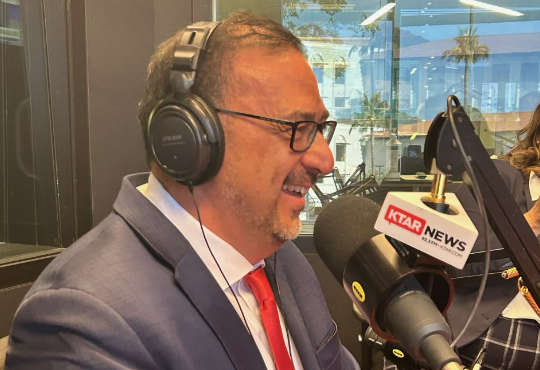
Speaking with KTAR’s Jim Sharpe and Jayme West last week, Arizona Secretary of State Adrian Fontes openly attacked the Arizona Free Enterprise Club after the group successfully fought to strip away rules from the 2023 Elections Procedures Manual (EPM). The very next day, AFEC President Scott Mussi responded.
As previously reported by AZ Free News, Maricopa County Superior Court Judge Jennifer Ryan-Touhill ruled that Fontes’ 2023 EPM contained speech restrictions that violated the Arizona Constitution, as well as misstatements and modifications of statutes, and failures to identify distinctions between guidance and legal mandates.
ICYMI: A Maricopa County Superior Court Judge has ruled that certain portions of Secretary Fontes’ radical Elections Procedures Manual violated Arizonans’ First Amendment rights. https://t.co/HwhZi45sXk
Fontes began by immediately mischaracterizing the lawsuit from the Arizona Free Enterprise Club saying, “First and foremost, I’m going to break a rule and talk about pending litigation. Usually I don’t, but this is important and this manual, the Elections Procedures Manual is promulgated by the Secretary of State every two years. And the rules that are in question right now are guidelines basically for elections workers, for election administrators across the state. And they do in this section particularly help to protect them and voters from harassment and intimidation, specifically using language like blocking the entrance to a voting location. Also, following voters or poll workers coming or leaving voting locations, including to or from their vehicles.
This is some of the language that we put in there, which was also in the 2019 manual, by the way, that the Free Enterprise Club wanted to block and they have now blocked. It is as if the Free Enterprise Club wants voters to get followed to and from their vehicles to polling locations. It is as if the Free Enterprise Club is okay with this.
Check this, they had this blocked by the judge too, intentionally disseminating false or misleading information at voting locations. So is the Free Enterprise Club want people to be lied to?”
We applaud the court’s protection of Arizonans’ First Amendment rights during the exercise of their sacred privilege to vote in free and fair elections. Secretary Fontes and his team of leftwing ideologues must conform the entire manual to state law as is their statutory duty.
Jayme West asked, “But that’s free speech, right? Yeah.”
Fontes answered with a rebuke to the First Amendment, “Is it when you are inside of the 75-foot zone? Look, not all speech is protected. Every American knows this. You can’t yell fire…” he began to quote a classic legal fallacy.
As Reason’s Emma Camp cited, Foundation for Individual Rights and Expression President Greg Lukianoff, wrote, “Anyone who says ‘you can’t shout fire! in a crowded theatre’ is showing that they don’t know much about the principles of free speech, or free speech law—or history. This old canard, a favorite reference of censorship apologists, needs to be retired. It’s repeatedly and inappropriately used to justify speech limitations.”
Host Jim Sharpe put the conversation back on track though, “You’re not allowed the electioneer within those 75 feet.”
“That’s exactly right.” Fontes said. “But what the Free Enterprise Club is doing is chipping away at a long established statutes. They’re chipping away at our ability to help the folks out there in our 15 counties regulate the behavior during election seasons. They basically want someone to be able to come up and scream and yell at voters as they’re standing in line to vote.”
West pushed back on the Secretary though, “But not necessarily about the election or electioneering. I mean you could just be yelling at somebody, right? It doesn’t have to be about the specific election itself right?” Fontes began to argue with her, “Is that how we want our voters to be treated? “ “No, I’m just saying not…” she began when Fontes cut her off. “That’s why I have…” But West continued, “not considered electioneering.”
Fontes continued saying, “…why I’m going to fight like heck to make sure that we have peaceful processes so that our voters are treated with dignity during this incredibly important point in time. Because here’s the deal, you have to stand in line in some circumstances and because the regulation is that you have to be in line, the government is forcing you to be in that line. You should be protected while you’re in that line to vote.
He then directly attacked the Arizona Free Enterprise Club claiming, “So the Free Club is basically saying, we want chaos, we want lies. We want people to be able to block entrances to voting locations. That’s what the Free Enterprise Club is saying. By asking for this order, I’m going to fight tooth and nail against this nonsense. So the next steps, as you asked, we have the capacity to appeal. Our lawyers are working on it right now. I’m going to protect every voter. I don’t care if you’re in Sun City, east Mesa or in Holbrook. I’m going to do everything I can to make this process peaceful and reasonable.”
The very next morning, Sharpe and West invited Arizona Free Enterprise Club President Scott Mussi to answer Fontes’ bold-faced politically-driven attack.
“Jim, Jamie, thanks for having me on this morning. These claims being made by Secretary of State Fontes are just outrageous, and it’s ridiculous that he’s attacking and maligning our organization, our 15,000 supporters and activists throughout here in the state of Arizona. Our donors, who he made veiled attacks saying that people should stop supporting our organization because of this ruling. We filed this lawsuit because simply put, Adrian Fontes included language in his Election Procedures Manual that exceeded its statute and was unconstitutionally overbroad. It constrained speech rights.
He’s citing things that simply, there’s already statutes and we didn’t challenge any specific statute. We challenged the language in the procedures manual itself and the language in the manual cannot rewrite state law, cannot create new laws, and there’s laws against the things that he’s describing. The things that we sued over are things dealing with speech constraints where he included vague language that’s undefined that could be used against people that are trying to simply engage in their First Amendment rights at poll locations.”
Sharpe asked Mussi, “So would you be okay with some of the provisions in the Election Procedures Manual that you’ve asked to have removed if they were worded in a more precise manner?”
Mussi replied, “The section of the Election Procedures Manual that we sued over included, again, as I mentioned before, vague language if it’s drafted in a way that’s consistent with what state law is or what statute is. And again, for example, he’s talking about blocking people. That’s against state law. You can’t do that. And that goes beyond even what’s really to an election. For example, nobody could show up at your guys’ radio station and block your ability to go to your vehicle. There’s already statutes against harassing other people. You can’t do those things. But that’s not what is Election Procedures Manual in the section that we were challenging does. Again, it includes language that says that if you raise your voice or say things that are offensive and these things are undefined, and if these things are enforced, you can be not only kicked out of the polling location, but you can be prosecuted.
The irony of all of this is that in the public ranting that Adrian Fontes is engaging in, where he is raising his voice, something could say or engaging a language that many people could find offensive, especially when he’s maligning our organization. Ironically, it could be used against him to kick him out of a polling location. It is bizarre. I think that the judge was correct. I would encourage everybody to read the ruling that the judge issued yesterday or earlier this week outlining this because it’s very clear these terms that he included in the Election Procedures Manual are overly broad. They infringe on people’s constitutional rights to engage in the election process.”
West sought some clarification from Mussi asking, “I asked him, I said, is it just an issue of it being the language being too broad? But he said that specifically your organization, the Arizona Free Enterprise Club, wants to make it okay to harass voters waiting to cast ballots at polling places.”
He answered, “And again, those comments and claims are outrageous and only vindicates that we were correct in filing this lawsuit.”
“We’re not just talking about just some individual. He is the top election officer here in the state of Arizona who’s now again, maligning and attacking our organization, our 15,000 activists and supporters throughout the state of Arizona. And we’re supposed to believe that he’s not now going to use this vague language that he included in the Election Procedures Manual to impinge on people’s First Amendment rights to engage in the political process.
And again, just based on his own behavior, he violated his own guidelines within his Election Procedures Manual. Or it could be interpreted that way. And that’s the problem because somebody does have a First Amendment right. If Adrian Fontes wants to show up at a polling location and complain that he lost a lawsuit to the Free Enterprise Club and say the same mistruths and lies that he said on your radio program, he does have a First Amendment right to do that.”
When reminded of the 75-foot barrier for electioneering under the law by Sharpe, Mussi added, “That’s correct. That’s another thing too that he said was factually wrong. He was talking about people. It’s against state law to go within the 75-foot parameters and election area. The Election Procedures Manual can’t change any of those statutes. And we weren’t challenging statutes. We were challenging this vague and overbroad and unconstitutional language that he included in the Election Procedures Manual.”
According to KTAR, Fontes said that his office plans to appeal the ruling and is hoping to expedite the request citing the general election being just three months away. In her scathing ruling, Judge Touhill called the EPM provisions “overbroad” and “unenforceable.”
Secretary of State Adrian Fontes pledged to have his office take a more assertive posture against misinformation for the 2024 election.
Fontes made the promise during an interview with 12 News on Sunday. The secretary of state said that his office would even take on the speech of other elected officials, if need be.
“You’re going to see a much more assertive attitude against folks who are lying about elections,” said Fontes. “What they’re doing is creating mistrust between regular citizens where there shouldn’t be any. None of the allegations about fraud, none of the Big Lie has been proven true.”
Fontes didn’t deny that his office may take legal action against perceived misinformation. As an example of the type of misinformation his office would target, Fontes said that Arizona voters use paper ballots — not voting machines — to cast their vote.
“We’re not going to play the role of victim. What we’re going to do is come right out and speak directly to the voters,” said Fontes. “When somebody says, ‘Well, you’ve got a problem with voting machines in Arizona.’ Well, guess what, we don’t have voting machines in Arizona. We vote on paper ballots; every ballot in Arizona has always been cast on paper ballots. You saying ‘voting machines’ is a lie. That’s the kind of assertiveness we’re going to have in our communications strategy.”
Technically, “voting machines” are those pieces of equipment that record votes electronically without paper. Arizona doesn’t have voting machines, but it does have equipment to tabulate votes, which are cast by paper ballot.
Since taking office, Fontes has pledged to combat mis- and disinformation. Fontes declared that election disinformation amounted to “terrorism” and the individuals behind the rhetoric were “fascists” in an interview with MSNBC shortly after being sworn into office. Fontes urged the public to “attack” the election disinformation.
“These new American fascists, these MAGA fascists — you call them denialists, they are fascists — we need to call them who they are,” said Fontes. “We’ve got to stop pretending that their feelings matter. These are people who are threatening the lives of our neighbors, our family members, and they’re threatening the health of our democracy.”
Vigor and strength. That’s the only way we protect our election workers and fight back against disinformation. Thank you @AliVelshi for speaking with me. https://t.co/XbZmJuQNgp
Fontes’ predecessor, now Gov. Katie Hobbs, also took an assertive posture against misinformation regarding elections. Hobbs coordinated with the Center for Internet Security (CIS), a government-funded organization, to censor online speech concerning the 2020 election.
Hobbs’ former chief of staff, Allie Bones, told reporters around the time of Hobbs’ inauguration that it was the job of governments to remove disinformation from the public square.
Hobbs was one among many government officials that coordinated with social media companies to suppress and censor speech on major public issues. Last fall, the Supreme Court agreed to take up a case concerning this coordination, Murthy v. Missouri. The court also granted a request from the Biden administration to block a lower court’s order preventing government officials from communicating with social media companies regarding content moderation policies.
Hobbs’ actions inspired the creation of a new ad hoc committee in the state legislature to review government officials’ relationships with social media companies. That House Ad Hoc Committee on Oversight, Accountability, and Big Tech convened three times in September, October, and December.
Corinne Murdock is a reporter for AZ Free News. Follow her latest on Twitter, or email tips to corinne@azfreenews.com.
The secretary of state’s office lacks the processes in place to remove about 78,000 potential noncitizens and nonresidents from its voter rolls.
In its last two quarterly reports issued to the state legislature in May and August, respectively, the department reported that it had received reports of but not acted on over 78,200 potentially invalid voters. The secretary of state’s office didn’t respond to our inquiry as to whether they have since put in place any processes to remove those potentially invalid voters from the voter rolls.
Through the beginning of August, the secretary of state received reports of over 53,200 persons reported to have been issued a driver’s license or equivalent of an Arizona nonoperating ID license in another state; over 1,300 persons who admitted to not being a citizen on a jury questionnaire; and over 23,600 persons who admitted to not being a resident of a county on a jury questionnaire. In those cases, the secretary of state’s office disclosed that a process for sending notices, placing voter registrations on inactive status, or canceling voter registrations was “in development.”
These reports were included as exhibits in a Monday filing by Attorney General Kris Mayes in the case Mi Familia Vota v. Adrian Fontes, a case seeking to nullify state election integrity laws requiring stricter standards for voter proof of citizenship and voter roll cleanups.
These reports were previously believed to have not been submitted to the legislature, per previous reporters’ accounts of an inability to obtain the records. According to the exhibits, the two reports were submitted to Sen. President Warren Petersen (R-AZ-14) and House Speaker Ben Toma (R-AZ-27).
Last month, the Democratic Party-backed activist groups secured a partial win in a ruling from Arizona District Court Judge Susan Bolton. The judge determined that the proof of citizenship requirement set forth by the two laws in question, HB 2492 and HB 2243, posed too great a burden on voters.
Several questions remain before the Arizona District Court in the case.
One concerns whether HB 2492’s requirement that voters provide their place of birth, referred to as the birthplace requirement, violates 52 U.S.C. § 10101(a)(2)(B), referred to as the materiality provision.
“No person acting under color of law shall – deny the right of any individual to vote in any election because of an error or omission on any record or paper relating to any application, registration, or other act requisite to voting, if such error or omission is not material in determining whether such individual is qualified under State law to vote in such election,” states the federal statute.
Last week, the Biden administration issued a brief declaring that birthplace wasn’t material to determining voter eligibility. Kristen Clarke, Civil Rights Division assistant attorney general, and Gary Restaino, Arizona District attorney, argued that certain individuals born in the U.S. can be noncitizens such as those with diplomat parents, those who later renounce their citizenship, and those born outside the country to U.S. citizen parents.
Another question concerns whether the voter list maintenance programs set forth by HB 2492 and HB 2243 violate 52 U.S.C. § 10101(a)(2)(A), referred to as the discrimination provision, or violate the National Voter Registration Act (NVRA).
“No person acting under color of law shall – in determining whether any individual is qualified under State law or laws to vote in any election, apply any standard, practice, or procedure different from the standards, practices, or procedures applied under such law or laws to other individuals within the same county, parish, or similar political subdivision who have been found by State officials to be qualified to vote,” states the federal statute.
Another concerns whether the NVRA requirement that states accept and use the Election Assistance Commission (EAC) federal voter registration form preempts HB 2243’s voter list maintenance program.
The case is scheduled to go to trial on Nov. 6.
Corinne Murdock is a reporter for AZ Free News. Follow her latest on Twitter, or email tips to corinne@azfreenews.com.