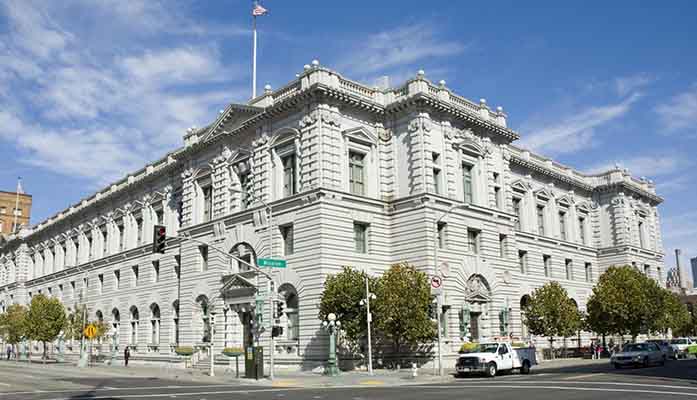
A federal court ruled that abortionists can challenge the state’s ban on discriminatory abortions.
The Ninth Circuit Court ruled on Monday in Isaacson v. Mayes that abortionists may petition for an injunction against state law prohibiting abortions based on fetal genetic abnormality, dubbed the “Reason Regulations.” Judges Ronald Gould, Andrew Hurwitz, and Roopali Desai agreed in their ruling with the abortionists’ claim that they endured economic harm. The abortionists blamed the abortion ban’s vagueness for moving them to conduct less abortions out of caution.
Specifically, the abortionists claimed that the discriminatory abortion ban violated the Fifth and Fourteenth Amendments: the threat of prison jeopardized their liberty interest, and the threats of license revocation, monetary damages, and revenue loss jeopardized their property interest. The circuit court dismissed the state’s claim of interest in regulating medical practice.
“That their services include abortion does not alter the fact that Plaintiffs make money providing these services and have lost money because the Reason Regulations restrict what services they can provide,” stated the ruling.
During the trial, the abortionists revealed that patients with likely or confirmed fetal abnormalities made up a significant part of their business.
The “Reason Regulations” made it a felony to either knowingly solicit or accept money to finance an abortion, or to perform an abortion, based on a fetal genetic abnormality.
The abortionists claimed that their overcompliance with the statute was due to the vagueness of the term “genetic abnormality,” and the statute’s lack of details on determining how much that factor had to play into a patient’s decision to get an abortion as well as the level of knowledge an abortionist would have to have in order to be guilty of violating the ban.
Monday’s ruling reversed an Arizona District Court order issued in February allowing the ban to go into effect. The district court rejected the abortionists’ request for a preliminary injunction, since the Supreme Court had just ruled that no constitutional right to abortion existed in its Dobbs v. Jackson Women’s Health ruling last year overturning Roe v. Wade.
The federal court remanded the case back to the district court for it to decide, once more, whether the state ban on discriminatory abortion may go into effect.
A similar ongoing case may nullify the results of Isaacson v. Mayes. In Planned Parenthood Arizona v. Mayes, the Arizona Supreme Court is scheduled to hear oral arguments in December to determine whether the state’s preemptive, pre-statehood, total abortion ban remains enforceable due to the overturning of Roe v. Wade.
The state’s total abortion ban was suspended following the Supreme Court’s 1973 decision in Roe v. Wade that created a constitutional right to abortion. Last year — prior to Dobbs v. Jackson Women’s Health — the state passed its 15-week abortion ban.
Planned Parenthood Arizona v. Mayes would decide which of the two laws has authority in the state.
The state never repealed its total abortion ban. The 15-week ban didn’t preclude the enforcement of any other preceding abortion laws.
Last week, Planned Parenthood Arizona (PPAZ) filed a motion to recuse Arizona Supreme Court Judge William Montgomery for his personal beliefs opposing PPAZ.
"[We] believe that all litigants in Arizona are entitled to have their cases heard by judges who are not biased against them, and that includes [us]…" Read more: https://t.co/e0nu7RxSst
— Planned Parenthood Arizona, Inc. (@PPArizona) October 26, 2023
Earlier this month, Gov. Katie Hobbs filed an amicus brief to oppose the total abortion ban.
Corinne Murdock is a reporter for AZ Free News. Follow her latest on Twitter, or email tips to corinne@azfreenews.com.
On Monday, the Ninth Circuit Court of Appeals heard oral arguments in a lawsuit arguing against the state’s ban on abortions solely for genetic defects.
In the case, Isaacson v. Mayes, pro-abortion doctors and groups appealed the district court’s denial of a preliminary injunction against Arizona’s ban on abortions based on genetic defects.
The legislature passed the ban, SB 1457, back in 2021.
The plaintiffs in the lawsuit against the ban are abortionists Paul Isaacson and Eric Reuss, along with the National Council of Jewish Women, Arizona National Organization For Women, and Arizona Medical Association.
Isaacson was a Phoenix-based abortionist with Family Planning Associates. Reuss was a Scottsdale-based OBGYN and former board member for Planned Parenthood of Arizona.
Judges Roopali Desai, Ronald Gould, and Andrew Hurwitz heard the oral arguments. While Desai and Hurwitz were engaged in the arguments with their questions, Gould hardly spoke except to request an adjustment of the livestream audio.
In March, House Speaker Ben Toma (R-LD27) and Senate President Warren Petersen (R-LD14) stepped up to defend the ban after Attorney General Kris Mayes said she would refuse to enforce the law. Mayes is acting as the defense in the lawsuit currently.
During Monday’s oral arguments, the main question at hand was whether the plaintiffs had Article III standing. Article III of the Constitution, as held by the Supreme Court, requires plaintiffs to prove an actual or imminent alleged injury that is concrete and particularized.
Jessica Sklarsky with the Center for Reproductive Rights argued on behalf of the plaintiffs that they suffer undisputed economic harms and threat of prosecution due to the abortion ban. The district court determined that the plaintiffs failed to meet the standard set by the 2014 Supreme Court case Susan B. Anthony List v. Driehaus, which determined that pre-enforcement challenges satisfy the Article III standard and are justiciable when a statute’s enforcement is sufficiently imminent.
Sklarksy also argued that the abortion ban qualified as a vague law, and therefore violated due process rights.
“Vague laws force those they govern to either avoid doing anything that is arguably covered by the law, or to engage in that conduct with the constant threat of arbitrary enforcement,” said Sklarsky.
Denise Harle with Alliance Defending Freedom (ADF), counsel on behalf of Toma and Petersen, countered that no Article III injury exists due to the lack of a credible threat of enforcement.
Harle pointed out that all 15 county attorneys have acceded their authority to Mayes, and that Mayes has disavowed enforcement of abortion law. Harle also pointed out Gov. Katie Hobbs’ executive order in June usurping all county attorneys’ authority on abortion law and conferring it to Mayes.
Hurwitz and Desai pushed back against Harle’s reference to Mayes and Hobbs’ conduct, arguing that Mayes didn’t issue a disclaimer in this case specifically detailing her intent to not enforce the law.
Hurwitz indicated that Toma and Petersen’s support of the law, as well as the private enforcement aspect of the law, indicated a credible threat of enforcement.
“Does the law really require that a credible threat be communicated? If the state of Arizona passes a statute and the two leaders of the legislature are here defending its constitutionality, isn’t that enough to show there is a credible not a certain but a credible threat of enforcement?” asked Hurwitz.
Harle disagreed, saying the potential for private enforcement constituted a hypothetical. She alluded to the arrangement by Hobbs and Mayes to not enforce abortion law.
“[T]he theoretical possibility of an injury sometime in the future is too conjectural when it’s not imminent,” said Harle.
Desai followed up by stating that the court’s decision in Tingley v. Fergusoncould apply to this case. In that case, a family counselor challenged the state of Washington’s ban on conversion therapy as a violation of free speech and religious practice. Harle responded that the existence of a law alone wasn’t sufficient for direct injury.
“Virtually anyone could look at a law, say ‘I’m not sure what that means, I’m going to do something or not do something’ [and] that would be enough for a federal court to weigh in and adjudicate the merits of that claim on a facial challenge,” said Harle.
Watch the full hearing here:
Corinne Murdock is a reporter for AZ Free News. Follow her latest on Twitter, or email tips to corinne@azfreenews.com.